If a doctrine is not unintelligible, it has to be vague; and if neither unintelligible nor vague, it has to be unverifiable. - Eric Hoffer
""
If a doctrine is not unintelligible, it has to be vague; and if neither unintelligible nor vague, it has to be unverifiable.
English
Collect this quote
About
Eric Hoffer
Eric Hoffer (25 July 1902 – 21 May 1983) was an American writer on social and political philosophy. His first book, The True Believer: Thoughts On The Nature Of Mass Movements (1951) is widely recognized as a classic on mass-movements and the psychological roots of fanaticism. Despite rising to fame with the success and popularity of his writings, he continued to work as a longshoreman until retiring at age 65.
Biography information from
Wikiquote·
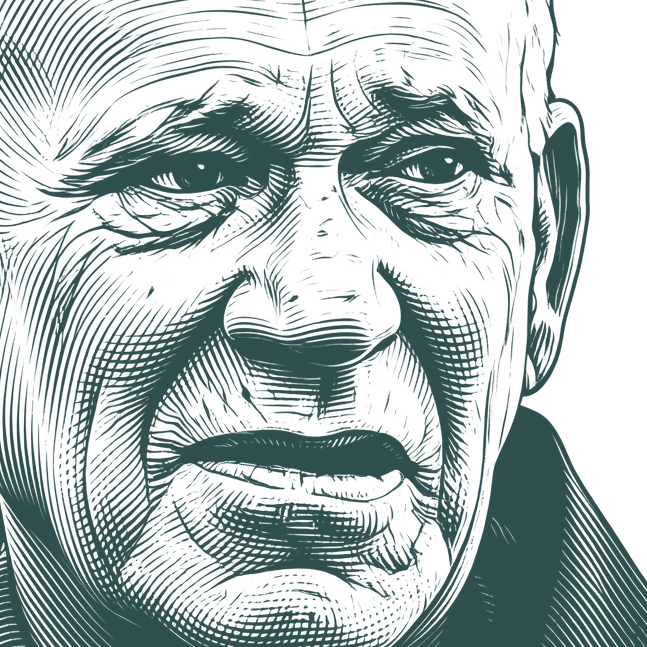
Portrait adapted from
Wikimedia Commons, White House of the President of the United States; uploaded to YouTube by TheLBJLibrary (Public domain / CC0)
Portrait from Wikimedia Commons. Credit: White House of the President of the United States; uploaded to YouTube by TheLBJLibrary. Used under Public domain / CC0. Processed and styled by Quotewise.
Try QuoteGPT
Chat naturally about what you need. Each answer links back to real quotes with citations.
Related quotes. More quotes will automatically load as you scroll down, or you can use the load more buttons.
To most of us nothing is so invisible as an unpleasant truth. Though it is held before our eyes, pushed under our noses, rammed down our throats — we know it not.
If anything ail a man,” says Thoreau, “so that he does not perform his functions, if he have a pain in his bowels even … he forthwith sets about reforming — the world.”3
The enemy — the indispensible devil of every mass movement — is omnipresent. He plots both outside and inside the ranks of the faithful. It is his voice that speaks through the mouth of the dissenter, and the deviationists are his stooges. If anything goes wrong within the movement, it is his doing. It is the sacred duty of the true believer to be suspicious. He must be constantly on the lookout for saboteurs, spies and traitors.