Canadian clinical psychologist, author, and political commentator and manosphere activist
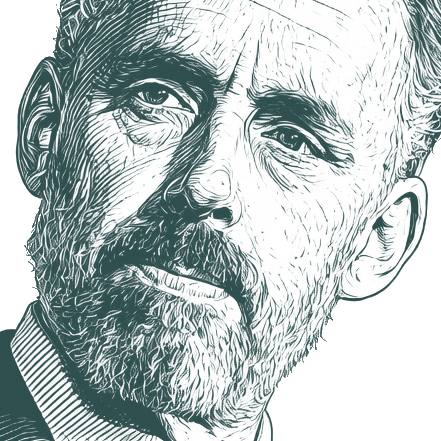
Jordan Bernt Peterson (born June 12, 1962) is a Canadian clinical psychologist at the University of Toronto. He is the author of Maps of Meaning: The Architecture of Belief (1999), 12 Rules for Life: An Antidote to Chaos (2017), Beyond Order: 12 More Rules for Life (2021) and We Who Wrestle With God (2024)
Bio from: Wikiquote (CC BY-SA 4.0) · Portrait adapted from: Wikimedia Commons, Gage Skidmore (CC BY-SA)
From Wikidata (CC0)
Works in ChatGPT, Claude, or Any AI
Add semantic quote search to your AI assistant via MCP. One command setup.
You already know what you know, after all — and, unless your life is perfect, what you know is not enough. You remain threatened by disease, and self-deception, and unhappiness, and malevolence, and betrayal, and corruption, and pain, and limitation. You are subject to all these things, in the final analysis, because you are just too ignorant to protect yourself. If you just knew enough, you could be healthier and more honest. You would suffer less. You could recognize, resist and even triumph over malevolence and evil. You would neither betray a friend, nor deal falsely and deceitfully in business, politics or love. However, your current knowledge has neither made you perfect nor kept you safe. So, it is insufficient, by definition — radically, fatally insufficient.
The intellect is the most incredible human capacity. It is the highest of all human capacities, actually. However, it is also the thing that can go most terribly wrong, because the intellect can become arrogant about its own existence and its accomplishments, and it can fall in love with its own products. That's what happens with ideologies. You become obsessed with a human-constructed dogma of which you believe is 100% right, and it eradicates the necessity of anything transcendent.
To say it again: it is the greatest temptation of the rational faculty to glorify its own capacity and its own productions and to claim that in the face of its theories nothing transcendent or outside its domain need exist. This means that all important facts have been discovered. This means that nothing important remains unknown.
It's so interesting to watch the young men when you talk to them about responsibility. They're so goddamned thrilled about it. It just blows me away. It's like, "Really?!" That's the counterculture: Grow the hell up and do something useful! "Really? I can do that? Oh, I'm so excited by that idea! No one ever mentioned that before!" It's like, "Rights, rights, rights, rights…" Jesus! It's appalling. People have had enough of that. And they better have, because it's a non-productive mode of being. Responsibility, man: that's where the meaning in life is.
You are by no means only what you already know. You are also all that which you could know, if you only would. Thus, you should never sacrifice what you could be for what you are. You should never give up the better that resides within for the security you already have — and certainly not when you have already caught a glimpse, an undeniable glimpse, of something beyond.
Lex Fridman: How often do you gaze upon death, your own? How often do you remember, remind yourself that this ride ends?
Jordan Peterson: Personally?
Lex Fridman: Personally. Jordan Peterson: All the time. Lex Fridman: 'Cause you as a deep thinker and philosopher, it's easy to start philosophizing and forgetting that you might die today.
Jordan Peterson: The angel of death sits on every word. How's that?
Lex Fridman: How often do you actually consciously— Jordan Peterson: All the time. Lex Fridman: —notice the angel? Jordan Peterson: All the time.
Memory is not a description of the objective past. Memory is a tool. Memory is the past’s guide to the future. If you remember that something bad happened, and you can figure out why, then you can try to avoid that bad thing happening again. That’s the purpose of memory. It’s not “to remember the past.” It’s to stop the same damn thing from happening over and over.
Unlimited Quote Collections
Organize your favorite quotes without limits. Create themed collections for every occasion with Premium.
I am indeed thrown arbitrarily into history. I therefore choose to voluntarily shoulder the responsibility of my advantages and the burden of my disadvantages — like every other individual. I am morally bound to pay for my advantages with my responsibility. I am morally bound to accept my disadvantages as the price I pay for being. I will therefore strive not to descend into bitterness and then seek vengeance because I have less to my credit and a greater burden to stumble forward with than others.
If you want to do something that's difficult and that requires energy, a lot of different subsystems in your mind are going to throw up objections. It's why — well, maybe that isn't what you should be doing right now. Maybe you should be doing the dishes, or vacuuming, or watching TV, or looking at YouTube. Or if you're really sneaky: when you're trying to do something hard, what your brain does is give you something else hard to do that's not quite as hard, so that you can feel justified in not doing the thing you're supposed to, because you're doing something else useful. And if you give in to that temptation — which you often will — then it wins. And because it wins, it gets a little dopamine kick, and it grows stronger. Anything you let win the internal argument grows, and anything you let be defeated shrinks, because it's punished — it doesn't get to have its way.
So that's another thing really to remember: don't practise what you do not want to become. And because those are neurological circuits, you build those things in there, man. They're not going anywhere. You can build another little machine to inhibit them — that's the best you can do. Once they're in there, you can't get them out. And the ones you build to inhibit can be taken out by stress, and the old habits will come back up. So you've got to be careful what you say and what you do, because you build yourself that way.