If then this tendency toward collectivization is a mutation there is no reason to suppose it is for the better. It is a rule in paleontology that orn… - John Steinbeck
""
If then this tendency toward collectivization is a mutation there is no reason to suppose it is for the better. It is a rule in paleontology that ornamentation and complication precede extinction. And our mutation, of which the assembly line, the collective farm, the mechanized army, and the mass production of food are evidences or even symptoms, might well correspond to the thickening armor of the great reptiles — a tendency that can end only in extinction.
English
Collect this quote
About
John Steinbeck
John Ernst Steinbeck Jr. (27 February 1902 – 20 December 1968) was an American writer. A recipient of the Nobel Prize for Literature in 1962, his works include the novella Of Mice and Men (1937) and the novel The Grapes of Wrath (1939, Pulitzer Prize for Fiction, 1940), both of which examine the lives of the working class and migrant workers during the Great Depression.
Biography information from
Wikiquote·
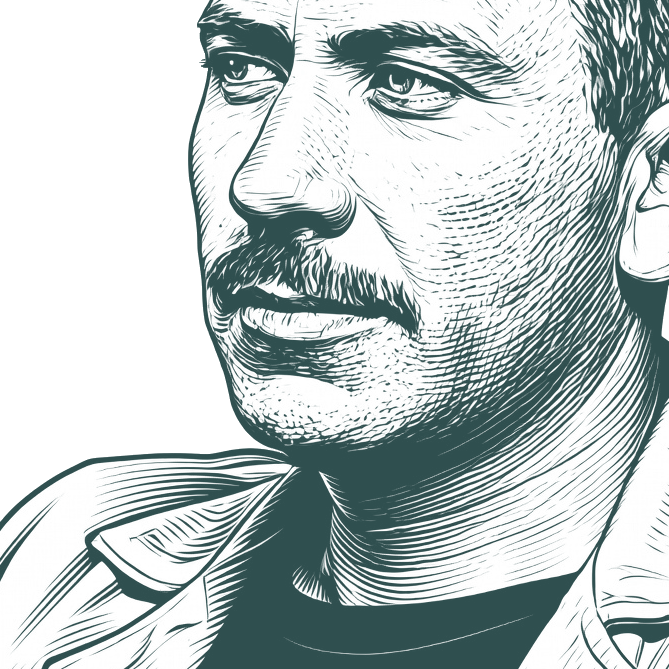
Portrait adapted from
Wikimedia Commons, McFadden Publications, Inc.; no photographer credited; photo likely the work of Sonya Noskowiak, as Steinbeck is wearing the same clothes from her 1935 studio session that produced the work shown here: https://www.si.edu/object/npg_NPG.2006.74 (Public domain / CC0)
Also Known As
Birth Name:
Jeffery Ernest Steinbeck
Alternative Names:
John Ernst Steinbeck, Jr.
•
John Ernst Steinbeck
•
John Ernest Steinbeck
•
John Ernst Steinbeck Jr
•
Steinbeck
Portrait from Wikimedia Commons. Credit: McFadden Publications, Inc.; no photographer credited; photo likely the work of Sonya Noskowiak, as Steinbeck is wearing the same clothes from her 1935 studio session that produced the work shown here: https://www.si.edu/object/npg_NPG.2006.74. Used under Public domain / CC0. Processed and styled by Quotewise.
Works in ChatGPT, Claude, or Any AI
Add semantic quote search to your AI assistant via MCP. One command setup.
What freedom men and women could have, were they not constantly tricked and trapped and enslaved and tortured by their sexuality! The only drawback in that freedom is that without it one would not be a human. One would be a monster.
It became his habit to creep out of bed even before his mother was awake, to slip into his clothes and to go quietly down to the barn to see Gabilan. In the grey quiet mornings when the land and the brush and the houses and the trees were silver-grey and black like a photograph negative, he stole toward the barn, past the sleeping stones and the sleeping cypress tree. The turkeys, roosting in the tree out of coyotes' reach, clicked drowsily. The fields glowed with a grey frost-like light and in the dew the tracks of rabbits and of field mice stood out sharply. The good dogs came stiffly out of their little houses, hackles up and deep growls in their throats. Then they caught Jody's scent, and their stiff tails rose up and waved a greeting Doubletree Mutt with the big thick tail, and Smasher, the incipient shepherd-then went lazily back to their warm beds. It was a strange time and a mysterious journey, to Jody -an extension of a dream. When he first had the pony he liked to torture himself during the trip by thinking Gabilan would not be in his stall, and worse, would never have been there. And he had other delicious little self-induced pains.
Go Premium
Support Quotewise while enjoying an ad-free experience and premium features.