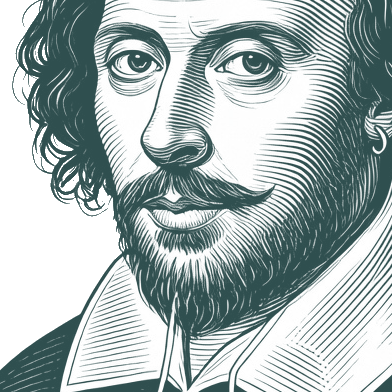
William Shakespeare (26 April 1564 (baptised) – 23 April 1616) was an English poet, playwright, and actor, widely regarded as the greatest writer in the English language and the world's pre-eminent dramatist.
Biography information from
Wikiquote·
Portrait adapted from
Wikimedia Commons, Attributed to John Taylor (Public domain / CC0)
Also Known As
Also Known As:The Bard of Avon
Alternative Names:
The Bard
•
Swan of Avon
•
Bard of Avon
•
Shakespeare
•
William Shakspere
•
Shakespere
•
Shakespear
•
Shakspeare
•
Shackspeare
•
Shakspere
•
William Shakspeare
•
William Shake‐speare
•
William Shak‐ſpeare
•
William Shake-speare
•
William Shak-ſpeare
Tis in ourselves that we are thus or thus. Our bodies are our gardens, to the which our wills are gardeners: so that if we will plant nettles, or sow lettuce, set hyssop and weed up thyme, supply it with one gender of herbs, or distract it with many, either to have it sterile with idleness, or manured with industry, why, the power and corrigible authority of this lies in our wills. If the balance of our lives had not one scale of reason to poise another of sensuality, the blood and baseness of our natures would conduct us to most preposterous conclusions: but we have reason to cool our raging motions, our carnal stings, our unbitted lusts, whereof I take this that you call love to be a sect or scion.
The love that follows us sometime is our trouble, which still we thank as love.
Try QuoteGPT
Chat naturally about what you need. Each answer links back to real quotes with citations.
For it falls out That what we have we prize not to the worth Whiles we enjoy it, but being lacked and lost, Why, then we rack the value, then we find The virtue that possession would not show us While it was ours.