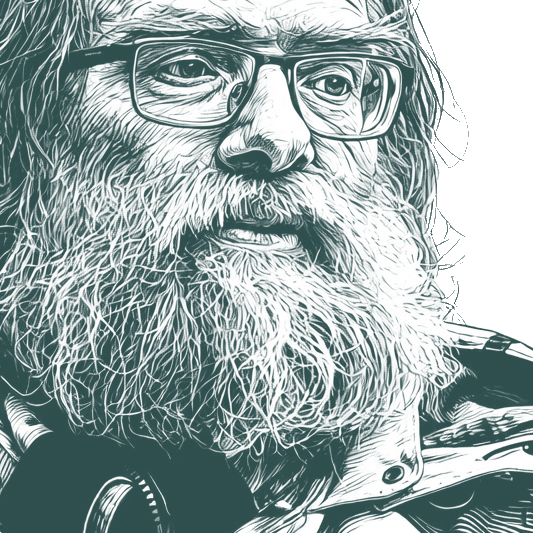
It cannot be denied that Gandhian non-violence has a few successes to its credit. But these were achieved under particularly favourable circumstances… - Koenraad Elst
""
It cannot be denied that Gandhian non-violence has a few successes to its credit. But these were achieved under particularly favourable circumstances: the stakes weren't very high and the opponents weren't too foreign to Gandhi's ethical standards.
Koenraad Elst (born 7 August 1959) is a Flemish right wing Hindutva author, known primarily for his support of the Out of India theory and the Hindutva movement. Scholars have accused him of harboring Islamophobia.
Sheldon Pollock, a very good Sanskritist at least in a purely linguistic sense, is more explicitly involved with the anti-Hindu discourse promoted in India by the missionaries and the Ambedkarites, and their first line of attack, the “secularists”. He has pioneered some valid insights into the Sanskrit “cosmopolis”, which did not oppress vernacular languages from Gandhari to Javanese but fruitfully coexisted with them to their mutual benefit. But at the same time, he has helped greatly in belittling and politicizing the Ramayana and in promoting the “Hinduism bad, Buddhism good” thesis. .. This is not very original, in fact it is only a sophisticated formulation of widely-held views. Thus, Pattanaik attributes the same viewpoint to another big name we just met: “Doniger’s essays on the Puranas make you see Hinduism as a violent authoritarian force challenged by non-violent egalitarian Buddhism.” But in this discourse of hate, which instrumentalizes Buddhism as a bludgeon to beat Hinduism with, Pollock has gone farther than all others. In 1993 he published a paper arguing that Hinduism (particularly the Mimansa school, Brahminical par excellence) sits at the centre of Nazi doctrine. Yes, it is long ago, and partly explainable from the war psychology emanating from the Ayodhya controversy, in which he explicitly sided with the negationist school denying Islam’s well-documented destructive role in Hindu history. But he has never retracted this position and has remained a leading voice in anti-Hindu and anti-Brahmin discourse.
All the same, he paid homage to the gods on some occasions. His breakthrough to liberation was followed by an intervention of the supreme gods Brahma and Indra, asking him to share his bliss and teach his way to liberation with others – the very start of Buddhism. Had the Buddha or even the later editors of the Pali Canon been as anti-Vedic as the present neo-Buddhists imagine, they could easily have censored this episode out. At the end of his life, during which he was regularly consulted on political matters because he was after all very at home in statecraft, he was asked by the authorities of a republic to formulate the qualities by which a state prevents decline. In reply, he listed the “seven principles of non-decline”, and among them is an abiding maintenance of ancient religious traditions, including rituals and pilgrimages. The ancient religious practices which he knew, were Vedic or at any rate Hindu ones. Buddhist monks later carried Vedic gods such as Indra, Brahma, Ganapati and Saraswati to foreign lands. Japanese temples are dedicated to Benzai-ten or Saraswati, some house the “twelve Adityas/Ten”. The Shingon sect of Buddhism has a quasi-Vedic ritual called “feeding the gods”, exactly the same conception as in the Vedas. Thai and Indonesian Buddhists have adopted the cult of Rama, whom the Buddha did not really worship but whom he venerated as a great scion of the Aikshvaku lineage to which he himself belonged, and of whom he claimed to be a reincarnation. Neo-Buddhists object to the long-established Puranic teaching that both Rama and the Buddha are incarnations of Vishnu, but the germ of this teaching was planted by the Buddha himself when he claimed that Rama and he were the same person.
Works in ChatGPT, Claude, or Any AI
Add semantic quote search to your AI assistant via MCP. One command setup.
There is in Chinese history one case of alleged religious persecution for purely economical reasons.So, the monasteries were abolished as a strictly institutional measure. The monks were not put to the sword, or forbidden to practice and teach Buddhism. It was simply not a case of religious persecution, which is a phenomenon quite alien to the entire Chinese civilization.