Enhance Your Quote Experience
Enjoy ad-free browsing, unlimited collections, and advanced search features with Premium.
" "Finally, there is one more kind of India-watcher or India-fan in the West, with a typical and remarkable attitude to the Ayodhya affair: the"seekers". Some people staying in India for spiritual things, and who were told that I was writing about this Ayodhya affair, immediately came out with their superior scorn for such unspiritual quarrels: "What are those Kar Sevaks going to Ayodhya for? To lay the second brick?" What these people should realize, is that the society which has allowed ashrams to flourish, has only survived because it also had a martial component. Why are they not going to Afghanistan for yoga? because Hinduism in Afghanistan got militarily defeated and annihilated. Because Islam, which in their own woolly world-view is just as true as any other religion, has weeded out the kind of Pagan practices that they come to India for. If there is a part of the world left where the gurus can continue their traditions, it is because Hindus have fought. It is a non-violent part of the same martial tradition, that today Hindus are asserting themselves in Ayodhya.
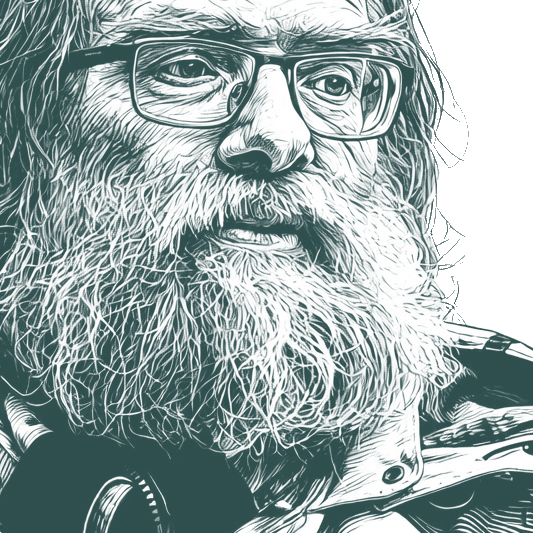
Koenraad Elst (born 7 August 1959) is a Flemish right wing Hindutva author, known primarily for his support of the Out of India theory and the Hindutva movement. Scholars have accused him of harboring Islamophobia.
Enjoy ad-free browsing, unlimited collections, and advanced search features with Premium.
Related quotes. More quotes will automatically load as you scroll down, or you can use the load more buttons.
It is no news if a secularist tells a lie: they have been doing it all along. Only, in the past they could get away with it, as the media and the publishers toed their line and withheld the publication of facts that pin-pricked their authority. ... Since the suppression of the truth concerning Ayodhya was part of a power equation to the secularists’ advantage, the waning of that power equation means that future scholars will now become free to take the mendaciousness of the then secularists into account.
The facts here are very clear, but rest assured that they will be contested. Like most Hindu-Muslim riots, this riot started as a Muslim pogrom on Hindus, with some spectacular killings of Hindu policemen, but then Hindus started striking back, and ultimately the Muslim death toll surpassed the Hindu one. Similar to Gujarat 2002, which started with a Muslim pogrom of 59 Hindu women and children in the women's wagon of a train returning from Ayodhya, locked in and burned to death. Then the Hindus retaliated, and it ended with some 300 Hindus and 800 Muslims killed. In international reporting, the all-explaining opening move is scrupulously left out, as if you have WW2 start on 6 June 1944 with the Allied "aggression" on Europe and highlight the higher death toll on the German compared to the Anglo-American side. "Major media have been caught in the act of fabricating fake news, e.g. the Wall Street Journal brought an interview with policeman Ankit Sharma's brother, who described how a (Muslim) mob had stabbed his brother to death. In the published version, the WSJ inserted that this mob was shouting a Hindu battle-cry to shift the blame to the Hindus to save their narrative that the Hindus were committing a pogrom. Fortunately, the brother and other witnesses publicly denied this and pointed out the WSJ's manipulation. Scroll.in and other papers published a photograph of a Muslim mob on the attack, easily recognizable by their clothes, and captioned that this was a "Hindu mob". When this was exposed, Scroll removed the photograph, i e. the evidence, but maintained its mendacious narrative. Same manipulation in Wikipedia, which suppressed corrections; or how blatantly fake news was quickly turned into the received wisdom.
Even the Buddha found a place on the saints' calendar under the name Saint Josaphat. ... The Gospels contain a number of almost literal repetitions of phrases, parables and scenes from the Buddhist canon, particularly from the Mahaparinirvana-Sutra: the master walking on water (and saying to the baffled disciples: "It's me"), the simile of the blind leading the blind, the multiplication of the loaves of bread, the master asking and accepting water from a woman belonging to a despised community, the call not to pass judgment on others, the call to respond to hostility with love, and other overly well-known motifs. Both doctrinal elements and biographical anecdotes have been borrowed. The Buddha's mother saw in a dream how a white elephant placed the promising boy in her womb while a heavenly being revealed the great news to the father, roughly like the annunciation to Mary and Joseph. The loose but devout woman Mary Magdalene is a neat copy of the Buddha-revering courtesan Amrapali. The iconography of Jesus resembles that of the expected future Buddha Maitreya, a name derived from maitri, "fellow-feeling, friendship", close enough to the Christian notion of agape/charity. The Maitreya is depicted with lotus flowers in the places where Jesus has stigmata of the crucifixion. This is becoming too much for coincidence, and the similarity is moreover strengthened by very specific details. Thus, Jesus relates how a widow offers two pennies from her humble possessions and thereby earns more merit than a wealthy man who gives a larger gift from his abundant riches. In Buddhist texts we find the same message in several variants, among them that of a widow offering two pennies; a holy monk disregards the larger gift of a wealthy man and praises the widow's piety. ... These similarities are certainly the fruit of historical contacts, though apart from the presence of a Buddhist community outside Alexandria (the Therapeutai), the details of the whereabouts of Buddhists in West Asia are as yet eluding us.