The essence of Hindu Dharma is not ‘tolerance’ or ‘equal respect for all religious’ but satya, truth. The problem with Christianity and Islam is supe… - Koenraad Elst
""
The essence of Hindu Dharma is not ‘tolerance’ or ‘equal respect for all religious’ but satya, truth. The problem with Christianity and Islam is superficially their intolerance and fanaticism. But this intolerance is a consequence of these religions’ untruthfulness. If your belief system is based on delusions, you have to pre-empt rational enquiry into it and shield it from contact with more sustainable thought systems. The fundamental problem with monotheistic religions is not that they are intolerant but that they are untrue (Asatya or Anrita).
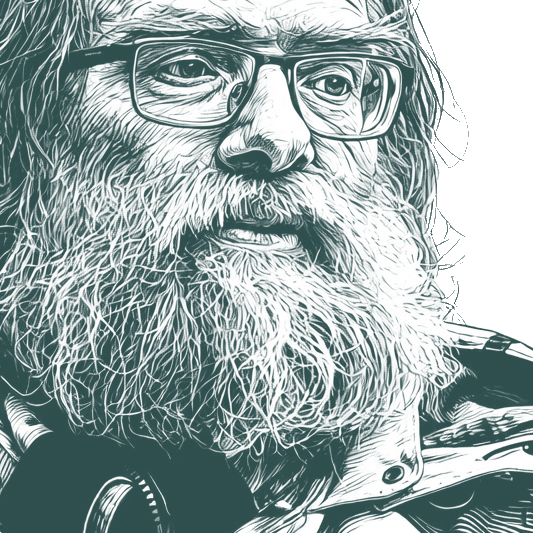
Koenraad Elst (born 7 August 1959) is a Flemish right wing Hindutva author, known primarily for his support of the Out of India theory and the Hindutva movement. Scholars have accused him of harboring Islamophobia.
In Pakistan, family planning is a joke. The responsible ministry is at present headed by a fundamentalist Muslim, Saddar Niazi, who boasts of being one of fifteen children. He has declared that the pressure for family planning was a holdover from the liberal secularism of Benazir Bhutto, and that he did not intend to implement the policies of a woman charged with corruption and overwhelmingly voted out in the 1990 election.265 His stand is not exceptional, rather it is the rule among Muslim governments. At any rate, Pakistan's birth rate stands at 3.2%, almost the doubt of India's. Indian Express, 12/12/1990.
So, all the predictions quoted above are far too conservative, for they are based on a linear projection. In reality, the observed trends are accelerating, so Muslims will need far less than 316 years to outnumber the Hindus. According to Mukherji, the Hindu percentage of ex-British India (including India, Pakistan, Bangladesh and Burma) should now have declined by about 13%, down to 54% of the total.
PREMIUM FEATURE
Advanced Search Filters
Filter search results by source, date, and more with our premium search tools.
Then, we see Mahatma Gandhi for the umpteenth time called the “Father of the Nation”. Though quite vain (as when he condoned the crowd demanding that MA Jinnah address him as “Mahatma” rather than “Mister”), Gandhi himself would have rejected this epithet. It stems from the new-fangled Nehruvian notion that India is a “nation in the making” conceived by the political unification under Queen Victoria, whereas Gandhi saw himself as a son of an age-old nation. This falsehood is a cornerstone of the Nehruvian rhetoric, but then nobody in his right mind had considered falsity and Nehruism incompatible.