Nonconformists travel as a rule in bunches. You rarely find a nonconformist who goes it alone. And woe to him inside a nonconformist clique who does … - Eric Hoffer
""
Nonconformists travel as a rule in bunches. You rarely find a nonconformist who goes it alone. And woe to him inside a nonconformist clique who does not conform with nonconformity.
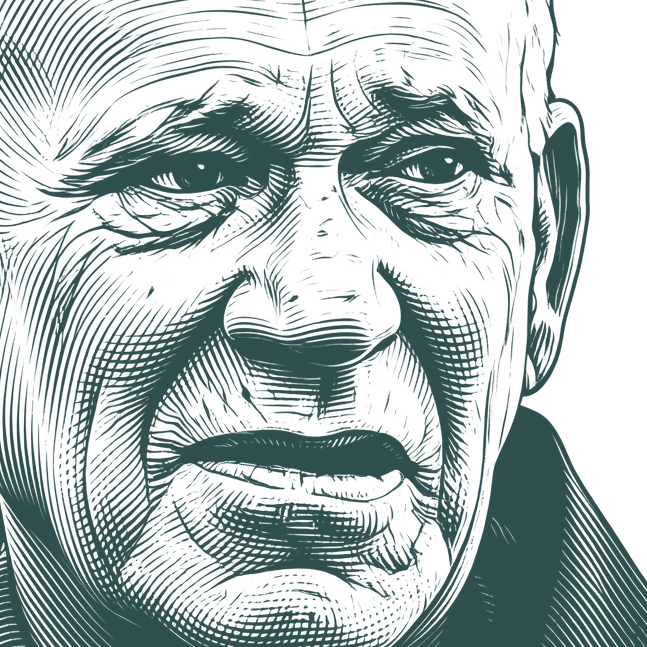
Eric Hoffer (25 July 1902 – 21 May 1983) was an American writer on social and political philosophy. His first book, The True Believer: Thoughts On The Nature Of Mass Movements (1951) is widely recognized as a classic on mass-movements and the psychological roots of fanaticism. Despite rising to fame with the success and popularity of his writings, he continued to work as a longshoreman until retiring at age 65.
Biography information from
Wikiquote·
Portrait adapted from
Wikimedia Commons, White House of the President of the United States; uploaded to YouTube by TheLBJLibrary (Public domain / CC0)
Portrait from Wikimedia Commons. Credit: White House of the President of the United States; uploaded to YouTube by TheLBJLibrary. Used under Public domain / CC0. Processed and styled by Quotewise.
PREMIUM FEATURE
Advanced Search Filters
Filter search results by source, date, and more with our premium search tools.
J. B. S. Haldane counts fanaticism among the only four really important inventions made between 3000 B.C and 1400 A.D. It was a Judaic-Christian invention. And it is strange to think that in receiving this malady of the soul the world also received a miraculous instrument for raising societies and nations from the dead—an instrument of resurrection.
Modern man is weighed down more by the burden of responsibility than by the burden of sin. We think him more a savior who shoulders our responsibilities than him who shoulders our sins. If instead of making decisions we have but to obey and do our duty, we feel it as a sort of salvation.
Go Premium
Support Quotewise while enjoying an ad-free experience and premium features.
To think out a problem is not unlike drawing a caricature. You have to exaggerate the salient point and leave out that which is not typical. "To illustrate a principle," says Bagehot, "you must exaggerate much and you must omit much." As to the quantity of absolute truth in a thought: it seems to me the more comprehensive and unobjectionable a thought becomes, the more clumsy and unexciting it gets. I like half-truths of a certain kind — they are interesting and they stimulate.