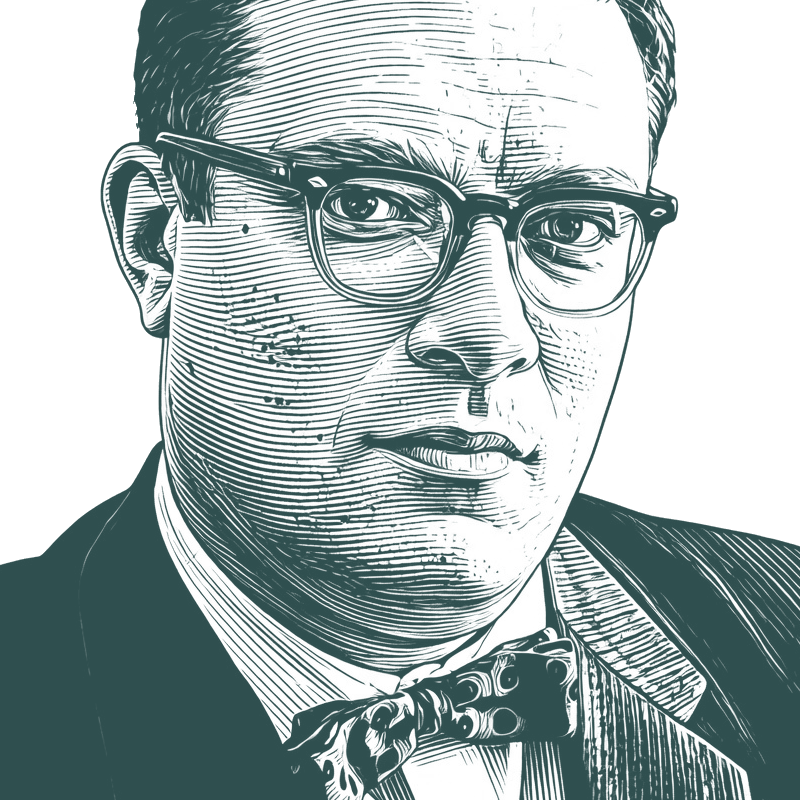
«Las Tres Leyes de la Robótica de Asimov» y son las siguientes: 1. Un robot no puede hacer daño a un ser humano, o, por medio de la inacción, permiti… - Isaac Asimov
""
«Las Tres Leyes de la Robótica de Asimov» y son las siguientes: 1. Un robot no puede hacer daño a un ser humano, o, por medio de la inacción, permitir que un ser humano sea lesionado. 2. Un robot debe obedecer las órdenes recibidas por los seres humanos, excepto si estas órdenes entrasen en conflicto con la Primera Ley. 3. Un robot debe proteger su propia existencia en la medida en que esta protección no sea incompatible con la Primera y la Segunda Ley.
Isaac Asimov (c. 2 January 1920 – 6 April 1992) was a Russian-born American biochemist who was a prolific writer of both fiction and non-fiction, his works include the Foundation series and I, Robot.
Biography information from
Wikiquote·
Portrait adapted from
Wikimedia Commons, Phillip Leonian [1] from New York World-Telegram & Sun.[2] (Public domain / CC0)
Also Known As
Alternative Names:
Isaak Osimov
•
Paul French
•
Asimov
•
Isaak Ozimov
•
Itzhak Ozimov
Portrait from Wikimedia Commons. Credit: Phillip Leonian [1] from New York World-Telegram & Sun.[2]. Used under Public domain / CC0. Processed and styled by Quotewise.
PREMIUM FEATURE
Advanced Search Filters
Filter search results by source, date, and more with our premium search tools.
Earth's population was still rising. Some day, with all that the Cities could do, the available calories per person would simply fall below basic subsistence level.
Imagine that. Terrible, terrible, the way we have all bent to the yoke; the affection we have for the harness about us.
Los seguidores del Viejo de la Montaña fueron llamados hashishin («fumadores de hachís»). Para los europeos, este nombre se convirtió en la voz «asesinos».