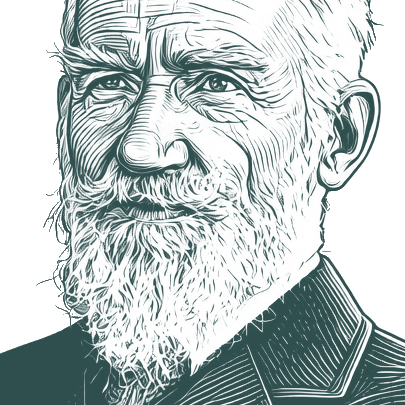
The power of accurate observation is commonly called cynicism by those who don't have it. - George Bernard Shaw
""
The power of accurate observation is commonly called cynicism by those who don't have it.
English
Collect this quote
About
George Bernard Shaw
George Bernard Shaw (26 July 1856 – 2 November 1950), known at his insistence simply as Bernard Shaw, was an Irish playwright, critic, polemicist and political activist with a range incorporating both contemporary satire and historical allegory. He wrote more than sixty plays, including such works as Man and Superman (1902), Pygmalion (1913) and Saint Joan (1923). Shaw was awarded the Nobel Prize in Literature in 1925.
"People are always blaming their circumstances for what they are. I don’t believe in circumstances. The people who get on in this world are the people who get up and look for the circumstances they want, and if they can’t find." them, make them
Scratch an Englishman and find a Protestant.
BROADBENT [stiffly]. Devil is rather a strong expression in that connexion, Mr Keegan.
KEEGAN. Not from a man who knows that this world is hell. But since the word offends you, let me soften it, and compare you simply to an ass. [Larry whitens with anger].
BROADBENT [reddening]. An ass!
KEEGAN [gently]. You may take it without offence from a madman who calls the ass his brother — and a very honest, useful and faithful brother too. The ass, sir, is the most efficient of beasts, matter-of-fact, hardy, friendly when you treat him as a fellow-creature, stubborn when you abuse him, ridiculous only in love, which sets him braying, and in politics, which move him to roll about in the public road and raise a dust about nothing. Can you deny these qualities and habits in yourself, sir?
BROADBENT [goodhumoredly]. Well, yes, I'm afraid I do, you know.
KEEGAN. Then perhaps you will confess to the ass's one fault.
BROADBENT. Perhaps so: what is it?
KEEGAN. That he wastes all his virtues — his efficiency, as you call it — in doing the will of his greedy masters instead of doing the will of Heaven that is in himself. He is efficient in the service of Mammon, mighty in mischief, skilful in ruin, heroic in destruction. But he comes to browse here without knowing that the soil his hoof touches is holy ground. Ireland, sir, for good or evil, is like no other place under heaven; and no man can touch its sod or breathe its air without becoming better or worse. It produces two kinds of men in strange perfection: saints and traitors. It is called the island of the saints; but indeed in these later years it might be more fitly called the island of the traitors; for our harvest of these is the fine flower of the world's crop of infamy. But the day may come when these islands shall live by the quality of their men rather than by the abundance of their minerals; and then we shall see.
LARRY. Mr Keegan: if you are going to be sentimental about Ireland, I shall bid you good evening. We