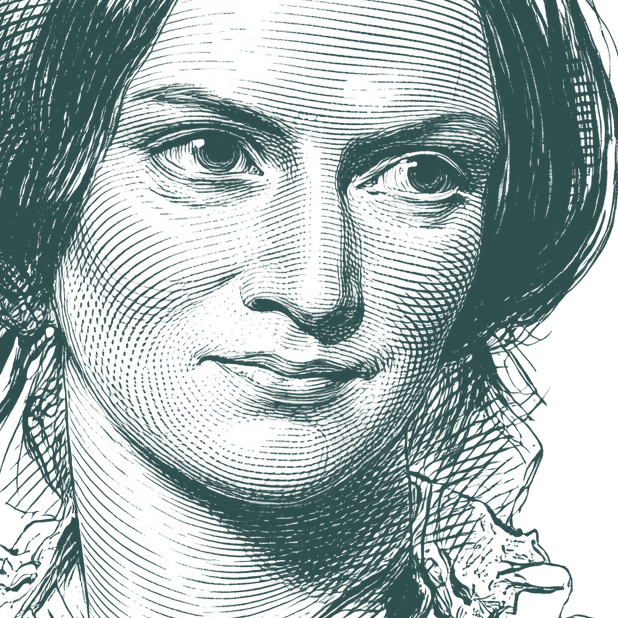
Charlotte Brontë (21 April 1816 – 31 March 1855) was an English novelist, the eldest of the three Brontë sisters, who first published her work under the pseudonym Currer Bell.
Biography information from
Wikiquote·
Portrait adapted from
Wikimedia Commons, George Richmond (Public domain / CC0)
Also Known As
Alternative Names:
Tree
•
Florian Wellesley
•
Lord Charles Albert
•
Captain Tree
•
Charles Wellesley
•
Charlotte Bronte
•
Currer Bell
•
Karlotta Bronte
•
Douro
•
Mrs. A. B. Nicholls
•
Charlotte Nicholls
•
Sharlotta Bronte
•
Mrs. Arthur Bell NichollsMrs. Arthur Bell Nicholls
if people were always kind and obedient to those who are cruel and injust, the wicked people would have it all their own way: they will never be afraid, and so they would never alter, but would grow worse and worse. When we are struck at without a reason we should strike back again very hard; I am sure we should- so hard as to teach the person who struck us never to do it again
God surely did not create us, and cause us to live, with the sole end of wishing always to die. I believe, in my heart, we were intended to prize life and enjoy it, so long as we retain it. Existence never was originally meant to be that useless, blank, pale, slow-trailing thing it often becomes to many, and is becoming to me, among the rest.
Go Premium
Support Quotewise while enjoying an ad-free experience and premium features.
You advise me, too, not to stray far from the ground of experience, as I become weak when I enter the region of fiction; and you say, "real experience is perennially interesting, and to all men." I feel that this also is true; but, dear Sir, is not the real experience of each individual very limited? And, if a writer dwells upon that solely or principally, is he not in danger of repeating himself, and also of becoming an egotist? Then, too, imagination is a strong, restless faculty, which claims to be heard and exercised: are we to be quite deaf to her cry, and insensate to her struggles? When she shows us bright pictures, are we never to look at them, and try to reproduce them? And when she is eloquent, and speaks rapidly and urgently in our ear, are we not to write to her dictation?