Advanced Search Filters
Filter search results by source, date, and more with our premium search tools.
" "A thing so triumphantly illogical, so beautifully senseless as an army can’t allow a question to weaken it.
John Ernst Steinbeck Jr. (27 February 1902 – 20 December 1968) was an American writer. A recipient of the Nobel Prize for Literature in 1962, his works include the novella Of Mice and Men (1937) and the novel The Grapes of Wrath (1939, Pulitzer Prize for Fiction, 1940), both of which examine the lives of the working class and migrant workers during the Great Depression.
Biography information from Wikiquote
Filter search results by source, date, and more with our premium search tools.
Related quotes. More quotes will automatically load as you scroll down, or you can use the load more buttons.
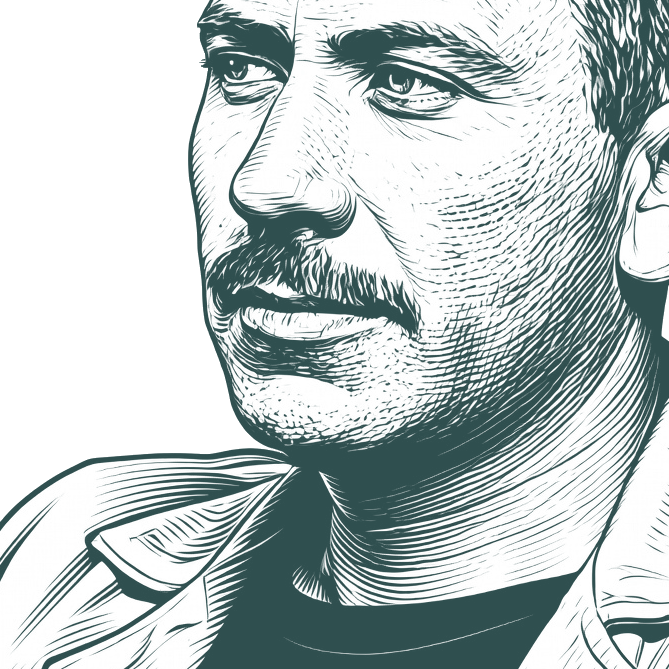
A kind of second childhood falls on so many men. They trade their violence for the promise of a small increase of life span. In effect, the head of the house becomes the youngest child. And I have searched myself for this possibility with a kind of horror. For I have always lived violently, drunk hugely, eaten too much or not at all, slept around the clock or missed two nights of sleeping, worked too hard and too long in glory, or slobbed for a time in utter laziness. I’ve lifted, pulled, chopped, climbed, made love with joy and taken my hangovers as a consequence, not as a punishment. I did not want to surrender fierceness for a small gain in yardage. My wife married a man; I saw no reason why she should inherit a baby.
WHEREVER WE HAD BEEN in Russia, in Moscow, in the Ukraine, in Stalingrad, the magical name of Georgia came up constantly. People who had never been there, and who possibly never could go there, spoke of Georgia with a kind of longing and a great admiration. They spoke of Georgians as supermen, as great drinkers, great dancers, great musicians, great workers and lovers. And they spoke of the country in the Caucasus and around the Black Sea as a kind of second heaven. Indeed, we began to believe that most Russians hope that if they live very good and virtuous lives, they will go not to heaven, but to Georgia, when they die. It is a country favored in climate, very rich in soil, and it has its own little ocean. Great service to the state is rewarded by a trip to Georgia. It is a place of recuperation for people who have been long ill. And even during the war it was a favored place, for the Germans never got there, neither with planes nor with troops. It is one of the places that was not hurt at all.
A child may ask, “What is the world’s story about?” And a grown man or woman may wonder, “What way will the world go? How does it end and, while we’re at it, what’s the story about?”
I believe that there is one story in the world, and only one, that has frightened and inspired us, so that we live in a Pearl White serial of continuing thought and wonder. Humans are caught — in their lives, in their thoughts, in their hungers and ambitions, in their avarice and cruelty, and in their kindness and generosity too — in a net of good and evil. I think this is the only story we have and that it occurs on all levels of feeling and intelligence. Virtue and vice were warp and woof of our first consciousness, and they will be the fabric of our last, and this despite any changes we may impose on field and river and mountain, on economy and manners. There is no other story. A man, after he has brushed off the dust and chips of his life, will have left only the hard, clean questions: Was it good or was it evil? Have I done well — or ill?