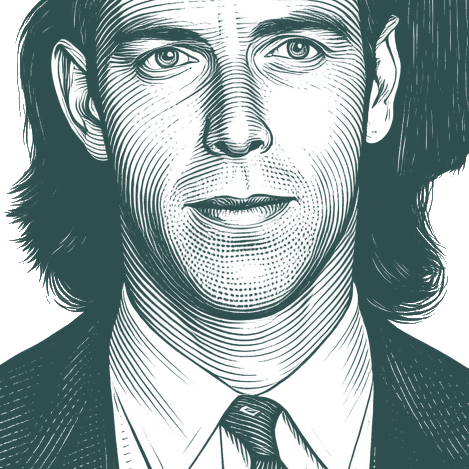
It is fundamental to both Taoist and Confucian thought that the natural man is to be trusted, and from their standpoint it appears that the Western m… - Alan Watts
""
It is fundamental to both Taoist and Confucian thought that the natural man is to be trusted, and from their standpoint it appears that the Western mistrust of human nature-whether theological or technological-is a kind of schizophrenia. It would be impossible, in their view, to believe oneself innately evil without discrediting the very belief, since all the notions of a perverted mind would be perverted notions.
Alan Wilson Watts (6 January 1915 – 16 November 1973) was an English philosopher, writer, speaker, and expert in comparative religion.
Biography information from
Wikiquote·
Portrait adapted from
Wikimedia Commons, The University of Vermont Alumni Magazine vol. 39 no. 01, p. 22. (Public domain / CC0)
Also Known As
Alternative Names:
Alan Wilson Watts
•
Alan W. Watts
Portrait from Wikimedia Commons. Credit: The University of Vermont Alumni Magazine vol. 39 no. 01, p. 22.. Used under Public domain / CC0. Processed and styled by Quotewise.
Works in ChatGPT, Claude, or Any AI
Add semantic quote search to your AI assistant via MCP. One command setup.
Not long ago Congress voted, with much patriotic rhetoric, for the imposition of severe penalties upon anyone presuming to burn the flag of the United States. Yet the very Congressmen who passed this law are responsible, by acts of commission or omission, for burning, polluting, and plundering the territory that the flag is supposed to represent. Therein, they exemplified the peculiar and perhaps fatal fallacy of civilization: the confusion of symbol with reality.
[T]he natural universe is not a linear system. It involves an infinitude of variables interacting simultaneously, so that it would take incalculable aeons to translate even one moment of its operation into linear, alphabetic language.
Unlimited Quote Collections
Organize your favorite quotes without limits. Create themed collections for every occasion with Premium.
If my happiness at this moment consists largely in reviewing happy memories and expectations, I am but dimly aware of this present. I shall still be dimly aware of the present when the good things that I have been expecting come to pass. For I shall have formed a habit of looking behind and ahead, making it difficult for me to attend to the here and now. If, then, my awareness of the past and future makes me less aware of the present, I must begin to wonder whether I am actually living in the real world.