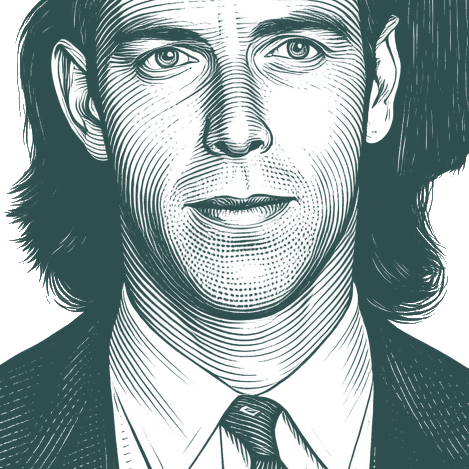
We seldom realize, for example, that our most private thoughts and emotions are not actually our own. For we think in terms of languages and images w… - Alan Watts
""
We seldom realize, for example, that our most private thoughts and emotions are not actually our own. For we think in terms of languages and images which we did not invent, but which were given to us by our society. We copy emotional reactions from our parents, learning from them that excrement is supposed to have a disgusting smell and that vomiting is supposed to be an unpleasant sensation. The dread of death is also learned from their anxieties about sickness and from their attitudes to funerals and corpses. Our social environment has this power just because we do not exist apart from a society. Society is our extended mind and body.
English
Collect this quote
About
Alan Watts
Alan Wilson Watts (6 January 1915 – 16 November 1973) was an English philosopher, writer, speaker, and expert in comparative religion.
Biography information from
Wikiquote·
Portrait adapted from
Wikimedia Commons, The University of Vermont Alumni Magazine vol. 39 no. 01, p. 22. (Public domain / CC0)
Also Known As
Alternative Names:
Alan Wilson Watts
•
Alan W. Watts
Life seems to be a system that eats itself to death, and in which victory equals defeat.
There is another story of a Chinese sage who was asked, “How shall we escape the heat?” — meaning, of course, the heat of suffering. He answered, “Go right into the middle of the fire.” “But how, then, shall we escape the scorching flame?” “No further pain will trouble you!
Enhance Your Quote Experience
Enjoy ad-free browsing, unlimited collections, and advanced search features with Premium.
I had a long talk with Jung back in 1958 and I was enormously impressed with a man who was obviously very great but, at the same time, with whom everybody could be completely at ease. There are so many great people, great in knowledge or great in what is called holiness with whom the ordinary individual feels rather embarrassed. He feels inclined to sit on the edge of his chair and to feel immediately judged by this person’s wisdom or sanctity. Jung managed to have wisdom and I think also sanctity in such a way that when other people came into its presence they didn’t feel judged, they felt enhanced, encouraged and invited to share in a common life. And there was a sort of twinkle in Jung’s eye that gave me the impression that he knew himself to be just as much a villain as everybody else. There’s a nice German word - ‘hintergedanke’, which means a thought in the very far far back of your mind. Jung had a hintergedanke in the back of his mind which showed, it showed in the twinkle in his eyes, it showed that he knew and recognized what i have sometimes called ‘the element of irreducible rascality’ in himself.