That we are overdone with banking institutions which have banished the precious metals and substituted a more fluctuating and unsafe medium, that the… - Thomas Jefferson
""
That we are overdone with banking institutions which have banished the precious metals and substituted a more fluctuating and unsafe medium, that these have withdrawn capital from useful improvements and employments to nourish idleness, that the wars of the world have swollen our commerce beyond the wholesome limits of exchanging our own productions for our own wants, and that, for the emolument of a small proportion of our society who prefer these demoralizing pursuits to labors useful to the whole, the peace of the whole is endangered and all our present difficulties produced, are evils more easily to be deplored than remedied.
English
Collect this quote
About
Thomas Jefferson
Thomas Jefferson (13 April 1743 – 4 July 1826) was author of the Declaration of Independence (1776) and the Virginia Statute for Religious Freedom (1777), founder of the University of Virginia (1819), the third president of the United States (1801–1809), a political philosopher, editor of Jefferson's Bible (1819), and one of the most influential founders of the United States.
Biography information from
Wikiquote·
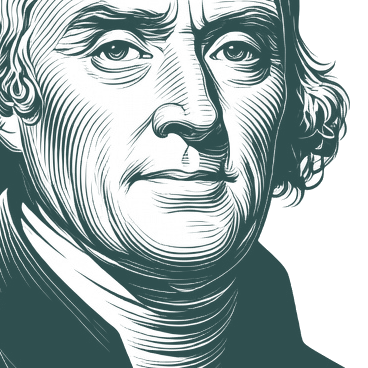
Portrait adapted from
Wikimedia Commons, Rembrandt Peale (Public domain / CC0)
Also Known As
Alternative Names:
President Jefferson
•
T. Jefferson
To your request of my opinion of the manner in which a newspaper should be conducted, so as to be most useful, I should answer, "by restraining it to true facts & sound principles only." Yet I fear such a paper would find few subscribers. It is a melancholy truth, that a suppression of the press could not more completely deprive the nation of its benefits, than is done by its abandoned prostitution to falsehood. Nothing can now be believed which is seen in a newspaper. Truth itself becomes suspicious by being put into that polluted vehicle. The real extent of this state of misinformation is known only to those who are in situations to confront facts within their knowledge with the lies of the day. . . . I will add, that the man who never looks into a newspaper is better informed than he who reads them; inasmuch as he who knows nothing is nearer to truth than he whose mind is filled with falsehoods & errors. He who reads nothing will still learn the great facts, and the details are all false.
There is nothing more unequal than the equal treatment of unequal people.
On matters of style, swim with the current, on matters of principle, stand like a rock.