Sometimes, when people have a low opinion of their own worth — or, perhaps, when they refuse responsibility for their lives — they choose a new acqua… - Jordan Peterson
""
Sometimes, when people have a low opinion of their own worth — or, perhaps, when they refuse responsibility for their lives — they choose a new acquaintance, of precisely the type who proved troublesome in the past. Such people don’t believe that they deserve any better — so they don’t go looking for it. Or, perhaps, they don’t want the trouble of better. Freud called this a “repetition compulsion.” He thought of it as an unconscious drive to repeat the horrors of the past — sometimes, perhaps, to formulate those horrors more precisely, sometimes to attempt more active mastery and sometimes, perhaps, because no alternatives beckon. People create their worlds with the tools they have directly at hand. Faulty tools produce faulty results. Repeated use of the same faulty tools produces the same faulty results. It is in this manner that those who fail to learn from the past doom themselves to repeat it. It’s partly fate. It’s partly inability. It’s partly … unwillingness to learn? Refusal to learn? Motivated refusal to learn?
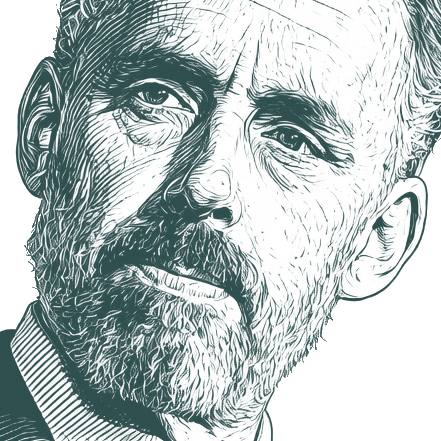
Jordan Bernt Peterson (born June 12, 1962) is a Canadian clinical psychologist at the University of Toronto. He is the author of Maps of Meaning: The Architecture of Belief (1999), 12 Rules for Life: An Antidote to Chaos (2017), Beyond Order: 12 More Rules for Life (2021) and We Who Wrestle With God (2024)
Mary is the Great Mother. She is the Mother. That's what Mary is. Whether she existed or not is not the point. She exists at least as a hyper-reality. She exists as the Mother. What's the sacrifice of the Mother? That's easy: If you're a mother who's worth her salt, you offer your son to be destroyed by the world. That's what you do. And that's what's going to happen. He's going to be born, he's going to suffer, he's going to have his trouble in life, he's going to have his illnesses, he's going to face his failures and catastrophes, and he's going to die. That's what's going to happen, and if you're awake you know that, and then you say, "Well, perhaps he will live in a way that will justify that." And then you try to have that happen. And that's what makes you worthy of a statue like the Pieta. "Is it right to bring a baby into this terrible world?" Well, every woman asks herself that question. Some say no, and they have their reasons. Mary answers 'yes' voluntarily. Mary is the archetype of the woman who answers yes to life voluntarily. Not because she is blind. She knows what's going to happen. So she's the archetypal representation of the woman who says yes to life knowing full well what life is.
Aristotle defined the virtues simply as the ways of behaving that are most conducive to happiness in life.
I know that the evidence for genuine religious experience is incontrovertible, but it's not explicable. So I don't want to explain it away. I want to pull back from that and leave it as a fact and a mystery, and then we're going to look at this from a rational perspective, and say that the initial formulation of the idea of God was an attempt to abstract out the ideal and to consider it as an abstraction outside its instantiation. And that's good enough. It's an amazing thing if it's true. But I don't want to throw the baby out with the bathwater.