Always the same. Now a spark of hope flashes up, then a sea of despair rages, and always pain; always pain, always despair, and always the same. When… - Leo Tolstoy
""
Always the same. Now a spark of hope flashes up, then a sea of despair rages, and always pain; always pain, always despair, and always the same. When alone he had a dreadful and distressing desire to call someone, but he knew beforehand that with others present it would be still worse.
English
Collect this quote
About
Leo Tolstoy
Lev Nikolayevitch Tolstoy [Ле́в Никола́евич Толсто́й, usually rendered Leo Tolstoy, or sometimes Tolstoi] (9 September 1828 – 20 November 1910) was a Russian writer, philosopher and social activist (social critic), whose novels War and Peace and Anna Karenina are internationally praised classics of world literature. He was a major influence on the development of Christian anarchism and pacifism, contributing to such nonviolent resistance movements as those of Mahatma Gandhi, Martin Luther King, Jr., and James Bevel.
Biography information from
Wikiquote·
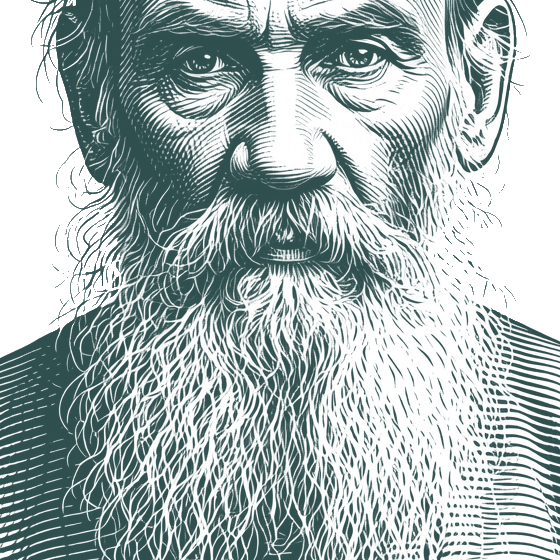
Portrait adapted from
Wikimedia Commons, Sergei Prokudin-Gorskii (Public domain / CC0)
Also Known As
Pen Names:
Л. Н. Т.
•
Л. Н.
Birth Name:
Lev Nikolayevich Tolstoy
Native Name:
Лев Никола́евич Толсто́й
Alternative Names:
Count Lev Nikolayevich Tolstoy
•
Tolstoy, Leo, graf, 1828-1910
•
Tolstoĭ, Lev Nikolaevich, graf, 1828-1910
•
Lev Nikolayevich Tolstoĭ
•
Leo Tolstoi
•
Tolstoĭ, Lev Nikolaevich, graf
•
Tolstoy, Leo, graf
Drops Dripped. Quiet talk went on. Horses neighed and scuffled. Someone snored.
An arrogant person considers himself perfect. This is the chief harm of arrogance. It interferes with a person's main task in life—becoming a better person.
Unlimited Quote Collections
Organize your favorite quotes without limits. Create themed collections for every occasion with Premium.