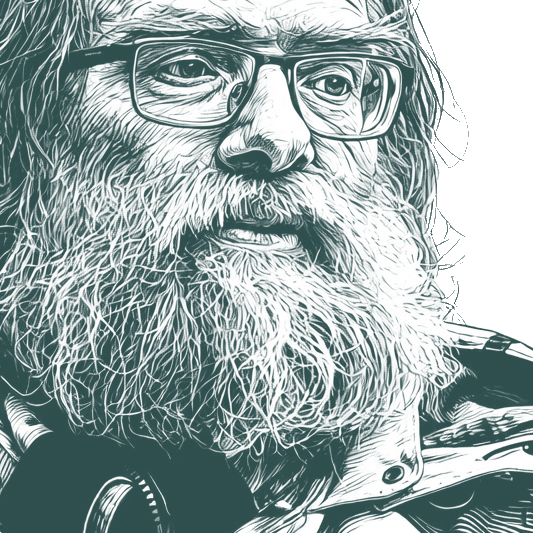
As Talageri has shown, the horse sacrifice originates in the Vedic period and then becomes prominent. Subsequently it was exported to Central Asia. I… - Koenraad Elst
""
As Talageri has shown, the horse sacrifice originates in the Vedic period and then becomes prominent. Subsequently it was exported to Central Asia. If remains of an Ashwamedha are found there, it is not earlier but later than the Vedic testimonies of this ritual. Its performers are not on the way to, but on the way from India. There is to need at all to deny the Central-Asian findings related to the Veda, only the implied chronology of the Vedas is wrong. Which is no wonder, as the present chronology is not based on anything.
Koenraad Elst (born 7 August 1959) is a Flemish right wing Hindutva author, known primarily for his support of the Out of India theory and the Hindutva movement. Scholars have accused him of harboring Islamophobia.
“Islamophobia”. This is a militant Islamic term, literally declaring criticism of Islam a mental illness and effectively criminalizing it.
Most secularists pretend not to know this unambiguous position of Savarkar’s (in many cases, they really don’t know, for Hindu-baiting is usually done without reference to primary sources). Likewise, Savarkar’s plea for caste intermarriage to promote the oneness of Hindu society is usually ignored in order to keep up the pretence that he was a reactionary on caste, an “upper-caste racist” (as Gyan Pandey puts it), and what not. There are no limits to secularist dishonesty, and so we are glad to find at least one voice in their crowd which does acknowledge these positions of Savarkar’s.... This is just another case of secularist justice: Hindu are damned if they do, damned if they don’t.
Go Premium
Support Quotewise while enjoying an ad-free experience and premium features.
One Western author who has become very popular among India’s history-writers is the American scholar Prof. Richard M. Eaton.... A selective reading of his work, focusing on his explanations but keeping most of his facts out of view, is made to serve the negationist position regarding temple destruction in the name of Islam. Yet, the numerically most important body of data presented by him concurs neatly with the classic (now dubbed “Hindutva”) account. In his oft-quoted paper “Temple desecration and Indo-Muslim states”, he gives a list of “eighty” cases of Islamic temple destruction. "Only eighty", is how the secularist history-rewriters render it, but Eaton makes no claim that his list is exhaustive. Moreover, eighty isn't always eighty. Thus, in his list, we find mentioned as one instance: "1994: Benares, Ghurid army. Did the Ghurid army work one instance of temple destruction? Eaton provides his source, and there we read that in Benares, the Ghurid royal army "destroyed nearly one thousand temples, and raised mosques on their foundations. (Note that unlike Sita Ram Goel, Richard Eaton is not chided by the likes of Sanjay Subramaniam for using Elliott and Dowson's "colonialist translation.") This way, practically every one of the instances cited by Eaton must be read as actually ten, or a hundred, or as in this case even a thousand temples destroyed. Even Eaton's non-exhaustive list, presented as part of "the kind of responsible and constructive discussion that this controversial topic so badly needs", yields the same thousands of temple destructions ascribed to the Islamic rulers in most relevant pre-1989 histories of Islam and in pro-Hindu publications.... If the “eighty” (meaning thousands of) cases of Islamic iconoclasm are only a trifle, the “abounding” instances of Hindu iconoclasm, “thoroughly integrated” in Hindu political culture, can reasonably be expected to number tens of thousands. Yet, Eaton’s list, given without reference to primary sources, contains, even in a maximalist reading (i.e., counting “two” when one king takes away two idols from one enemy’s royal temple), only 18 individual cases.... In this list, cases of actual destruction amount to exactly two...