If Tehran insists on combining the Persian imperial tradition with contemporary Islamic fervor, then a collision with America — and, indeed, with its… - Henry Kissinger
""
If Tehran insists on combining the Persian imperial tradition with contemporary Islamic fervor, then a collision with America — and, indeed, with its negotiating partners of the Six — is unavoidable. Iran simply cannot be permitted to fulfill a dream of imperial rule in a region of such importance to the rest of the world.
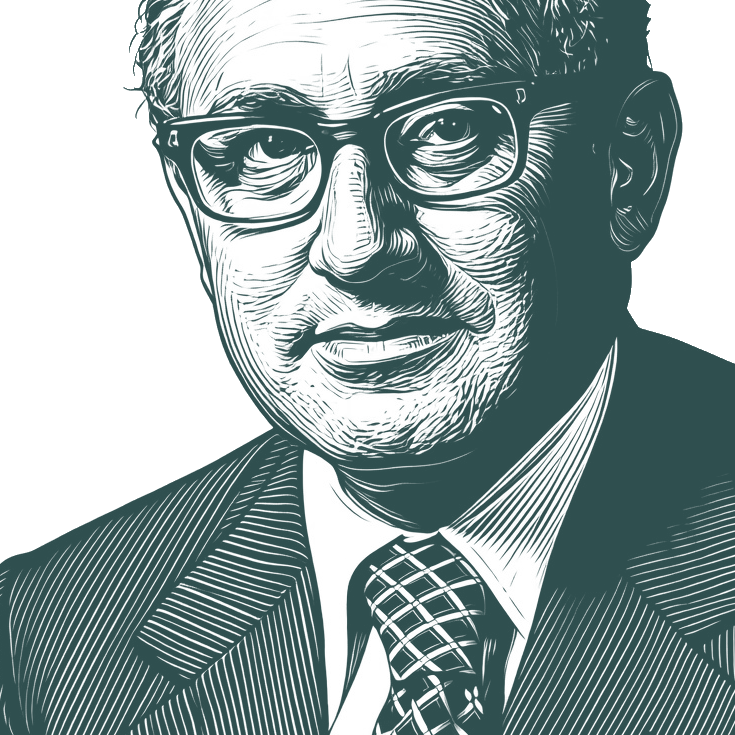
Henry Alfred Kissinger (born Heinz Alfred Kissinger; May 27, 1923 – November 29, 2023) was a German-American politician, diplomat, and geopolitical consultant who served as United States Secretary of State and National Security Advisor under the presidential administrations of Richard Nixon and Gerald Ford. He was a Jewish refugee who fled Nazi Germany with his family in 1938. For his actions negotiating a ceasefire in Vietnam, Kissinger received the 1973 Nobel Peace Prize under controversial circumstances, with two members of the committee resigning in protest. A practitioner of Realpolitik, Kissinger played a prominent role in United States foreign policy between 1969 and 1977. During this period, he pioneered the policy of détente with the Soviet Union, orchestrated the opening of relations with China, engaged in what became known as shuttle diplomacy in the Middle East to end the Yom Kippur War, and negotiated the Paris Peace Accords, ending American involvement in the Vietnam War.
Portrait adapted from
Wikimedia Commons, U.S. Department of State from United States (Public domain / CC0)
Also Known As
Alternative Names:
Henry Alfred Kissinger
•
Heinz Alfred Kissinger
•
Henry A. Kissinger
•
Heinz Kissinger
•
Kissinger
Portrait from Wikimedia Commons. Credit: U.S. Department of State from United States. Used under Public domain / CC0. Processed and styled by Quotewise.
PREMIUM FEATURE
Advanced Search Filters
Filter search results by source, date, and more with our premium search tools.
Facts are rarely self-explanatory; their significance, analysis, and interpretation—at least in the foreign policy world—depend on context and relevance.
Empires have no interest in operating within an international system; they aspire to be the international system. Empires have no need for a balance of power. That is how the United States has conducted its foreign policy in the Americas, and China through most of its history in Asia.
PREMIUM FEATURE
Advanced Search Filters
Filter search results by source, date, and more with our premium search tools.
[Referring to the people of India] They are superb flatterers, Mr. President. They are masters at flattery. They are masters at subtle flattery. That’s how they survived 600 years. They suck up — their great skill is to suck up to people in key positions. (June 17, 1971)