Most of us in our thinking are wandering from this to that to the other thing, and are constantly distracted. And Zen is the opposite of that. It’s b… - Alan Watts
""
Most of us in our thinking are wandering from this to that to the other thing, and are constantly distracted. And Zen is the opposite of that. It’s being completely here, fully in the present. And you know when you’re completely concentrated, you’re not really aware of your own existence. It’s rather the same as the sense of sight. If you see your eyes, that is to say if you see spots in front of your eyes, or something on the lens of the eye, then you’re not seeing properly. To the degree to which you’re seeing properly, you’re unaware of your eyes. In the same way, if your clothes fit well, you’re unaware of them on your body. And if you’re completely concentrated on what you’re doing, you’re unaware of yourself.
English
Collect this quote
About
Alan Watts
Alan Wilson Watts (6 January 1915 – 16 November 1973) was an English philosopher, writer, speaker, and expert in comparative religion.
Biography information from
Wikiquote·
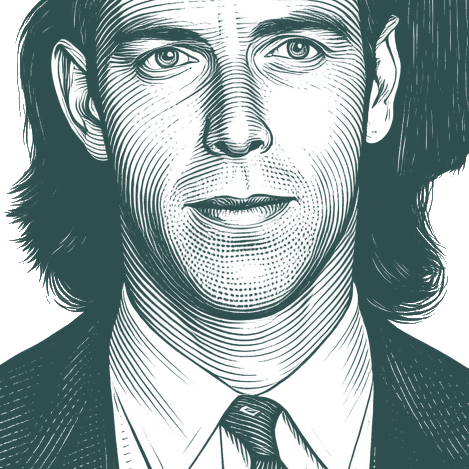
Portrait adapted from
Wikimedia Commons, The University of Vermont Alumni Magazine vol. 39 no. 01, p. 22. (Public domain / CC0)
Also Known As
Alternative Names:
Alan Wilson Watts
•
Alan W. Watts
Many Buddhists understand the Round of birth-and-death quite literally as a process of reincarnation, wherein the karma which shapes the individual does so again and again in life after life until, through insight and awakening, it is laid to rest. But in Zen, and in other schools of the Mahayana, it is often taken in a more figurative way, as that the process of rebirth is from moment to moment, so that one is being reborn so long as one identifies himself with a continuing ego which reincarnates itself afresh at each moment of time. Thus the validity and interest of the doctrine does not require acceptance of a special theory of survival.
Life exists only at this very moment, and in this moment it is infinite and eternal. For the present moment is infinitely small; before we can measure it, it has gone, and yet it persists forever. This movement and change has been called Tao by the Chinese. . . . A sage has said that if we try to accord with it, we shall get away from it. But he was not altogether right. For the curious thing is that you cannot get out of accord with it even if you want to; though your thoughts may run into the past or the future they cannot escape the present moment.
PREMIUM FEATURE
Advanced Search Filters
Filter search results by source, date, and more with our premium search tools.
You do not play a sonata in order to reach the final chord, and if the meanings of things were simply in ends, composers would write nothing but finales.