Bogert's face was bloodless, 'He's dead!' 'No!' Susan Calvin burst into body-racking gusts of wild laughter, 'not dead — merely insane. I confronted … - Isaac Asimov
""
Bogert's face was bloodless, 'He's dead!' 'No!' Susan Calvin burst into body-racking gusts of wild laughter, 'not dead — merely insane. I confronted him with the insoluble dilemma, and he broke down. You can scrap him now — because he'll never speak again.
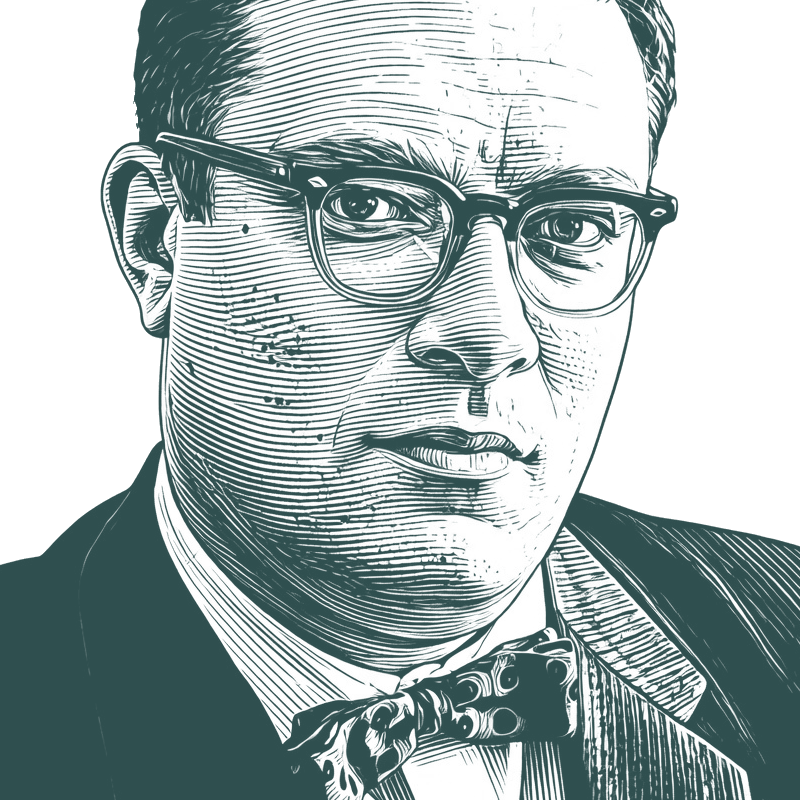
Isaac Asimov (c. 2 January 1920 – 6 April 1992) was a Russian-born American biochemist who was a prolific writer of both fiction and non-fiction, his works include the Foundation series and I, Robot.
Biography information from
Wikiquote·
Portrait adapted from
Wikimedia Commons, Phillip Leonian [1] from New York World-Telegram & Sun.[2] (Public domain / CC0)
Also Known As
Alternative Names:
Isaak Osimov
•
Paul French
•
Asimov
•
Isaak Ozimov
•
Itzhak Ozimov
Portrait from Wikimedia Commons. Credit: Phillip Leonian [1] from New York World-Telegram & Sun.[2]. Used under Public domain / CC0. Processed and styled by Quotewise.
Limited Time Offer
Premium members can get their quote collection automatically imported into their Quotewise collections.
there is something even higher than the justice which you have been filled with. There is a human impulse known as mercy; a human act known as forgiveness." "I am not acquainted with those words, partner Elijah." "I know," muttered Baley. "I know.
You are never too old to learn more than you already know and to become able to do more than you already can.
Es una lección invariable a la humanidad que la distancia en el tiempo, y asimismo en el espacio, da perspectiva a las cosas.