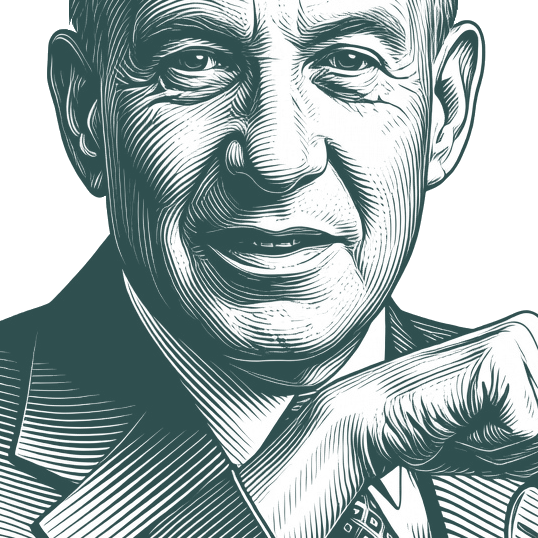
It is, above all, fruitless and a waste of time to worry about what is acceptable and what one had better not say so as not to evoke resistance. The … - Peter Drucker
""
It is, above all, fruitless and a waste of time to worry about what is acceptable and what one had better not say so as not to evoke resistance. The things one worries about never happen. And objections and difficulties no one thought about suddenly turn out to be almost insurmountable obstacles. One gains nothing, in other words, by starting out with the question “What is acceptable?” And in the process of answering it, one loses any chance to come up with an effective, let alone with the right, answer.
English
Collect this quote
About
Peter Drucker
Peter Ferdinand Drucker (November 19 1909 – November 11 2005) was an Austrian-born American writer, management consultant and university professor. In 1943 he became a naturalized citizen of the United States. He taught at New York University and Claremont Graduate University respectively.
A person can perform only from strength. One cannot build performance on weakness, let alone on something one cannot do at all.
For if this country—or any other of the great powers—were to make its defense program a function of its domestic employment situation, it would become impossible to conduct a constructive and well-thought out foreign policy or to develop any lasting collaboration.
Go Premium
Support Quotewise while enjoying an ad-free experience and premium features.
The only effective means for bailing out the new are people who have proven their capacity to perform. Such people are always already busier than they should be. Unless one relieves one of them of his present burden, one cannot expect him to take on the new task.