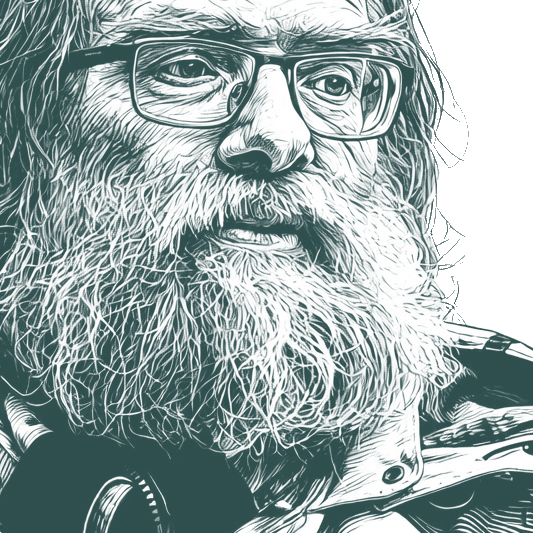
My job was not to survey other people's opinions about the Hindu movement. That would have been an interesting exercise, especially if it is called b… - Koenraad Elst
""
My job was not to survey other people's opinions about the Hindu movement. That would have been an interesting exercise, especially if it is called by its name, viz. a survey of outsider opinions, and not (as many such academic publications are) falsely presented as a study of the Hindu movement itself. By contrast, I endeavoured to get beyond the secondary--source and mainly hostile-source "research" that has so disastrously filled up this field of study, and focus on the primary sources instead.
English
Collect this quote
About
Koenraad Elst
Koenraad Elst (born 7 August 1959) is a Flemish right wing Hindutva author, known primarily for his support of the Out of India theory and the Hindutva movement. Scholars have accused him of harboring Islamophobia.
Unlike in the case of the Buddha, the monotheistic tag has stuck to Zarathustra. In non-specialist circles, the received wisdom nowadays is that he was a kind of Iranian Moses and that his religion may also have influenced the Israelites in a pro-monotheistic sense.
The VHP-mandated scholars, for their part, have not been aggressive enough to take the struggle into the enemy half of the field by focusing public attention on the quality of the evidence presented by the BMAC-mandated scholars and their allies in academe and the media. That is why the latter have gotten away with creating the false impression, at least among those unacquainted with the actual contents of the debate, that the pro-temple case is weak and fraudulent while, purely by implication, their own case must be unassailable.
Enhance Your Quote Experience
Enjoy ad-free browsing, unlimited collections, and advanced search features with Premium.
The foreign press has not added any extra facts or perspective to the reporting on Ayodhya. It has mostly copied the bias of the Indian press. Time Magazine gave a not too unbalanced report, but quoted two of the JNU historians without telling its readers that these are not neutral academics but highly involved parties in the controversy.