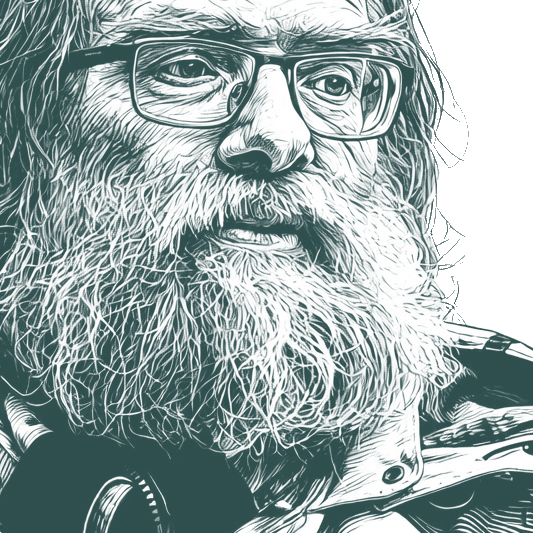
India only calls itself secular since 1975, when Indira Gandhi’s Emergency dictatorship inserted the words ‘secular, socialist’ into the Constitution… - Koenraad Elst
""
India only calls itself secular since 1975, when Indira Gandhi’s Emergency dictatorship inserted the words ‘secular, socialist’ into the Constitutional description of India as a ‘democratic, federal republic’. That makes these two words the only ones in the Constitution that never went through a proper parliamentary debate; the least democratic part of it. In the days of the Constituent Assembly, by contrast, Dr B.R. Ambedkar, chairman of the Constitution Drafting Committee, explicitly refused to include ‘secular’. When, twenty-eight years later, the term did get inserted, it had acquired the meaning ‘anti-Hindu’, yet most Hindus accept the term because they naïvely assume it still has the meaning ‘secular’.
English
Collect this quote
About
Koenraad Elst
Koenraad Elst (born 7 August 1959) is a Flemish right wing Hindutva author, known primarily for his support of the Out of India theory and the Hindutva movement. Scholars have accused him of harboring Islamophobia.
Look how claims are smuggled into this conclusion which have not been established in Sikand's argumentation. Even by Sikand's own figures, Hindus and Muslims were far from "equally" guilty... One of the best-documented defects of any religion is the role of Islamic doctrine in the destruction of other people's cultural treasures, rivalled only by Christianity in some of its phases, and surpassed only in the 20th century by Communism. A secularist should subject the record of Islam to criticism, not to a whitewash.
Note that we need not agree with the Śāstrakāra-s that the varnāśramadharma is truly “Vedic”, for we do not find it in the first nine books of the Rg-Veda. Even in the tenth book, the last and youngest one, we find it mentioned only once, and there only in the vaguest use, viz. the Purusa Sūkta’s recognition of the existence of four functions in society, without any details of how their personnel is recruited nor of how they should conduct themselves vis-à-vis one another, the very stuff that is the main focus of the Śāstra-s. Like medieval and contemporary Hindus, the Śāstra composers may have considered as ”Vedic” everything they held sacred, regardless of whether a particular norm or custom is indeed traceable to the Veda-s.
It is quite certain that some of these Austronesians must have landed in India, some on their way to Madagascar, some to stay and mix with the natives. Hence the presence of some Austronesian words in Indian languages of all families, most prominently ayi/bayi, "mother" (as in the Marathi girls' names Tarabai, Lakshmi-bai etc.), or words for "bamboo", "fruit", "honey". More spectacularly, linguists like Isidore Dyen have discerned a considerable common vocabulary in the core lexicon of Austronesian and Indo-European, including pronouns, numerals (e.g. Malay dva, "two") and terms for the elements. Oppenheimer doesn't go into this question, but diehard invasionists might use his findings to suggest an Aryan invasion into India not from the northwest, but from the southeast.