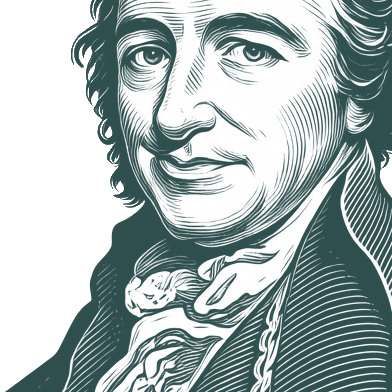
If a man makes the press utter atrocious things he becomes as answerable for them as if he had uttered them by word of mouth. Mr. Jefferson has said … - Thomas Paine
""
If a man makes the press utter atrocious things he becomes as answerable for them as if he had uttered them by word of mouth. Mr. Jefferson has said in his inaugural speech, that "error of opinion might be tolerated, when reason was left free to combat it." This is sound philosophy in cases of error. But there is a difference between error and licentiousness.
English
Collect this quote
About
Thomas Paine
Thomas Paine (February 9, 1737 [O.S. January 29, 1736] – 8 June 1809) was a British-American political writer, theorist, and activist who had a great influence on the thoughts and ideas which led to the American Revolution and the United States Declaration of Independence. He wrote three of the most influential and controversial works of the 18th Century: Common Sense, Rights of Man, and The Age of Reason. His ideas reflected Enlightenment-era ideals of transnational human rights.
Biography information from
Wikiquote·
Portrait adapted from
Wikimedia Commons, Auguste Millière / After George Romney / After William Sharp (Public domain / CC0)
Portrait from Wikimedia Commons. Credit: Auguste Millière / After George Romney / After William Sharp. Used under Public domain / CC0. Processed and styled by Quotewise.
Limited Time Offer
Premium members can get their quote collection automatically imported into their Quotewise collections.
Let them call me a rebel and welcome. I feel no concern from it. But should I suffer the misery of devils, were I to make a whore of my soul.
I believe in one God, and no more; and I hope for happiness beyond this life. I believe the equality of man, and I believe that religious duties consist in doing justice, loving mercy, and endeavouring to make our fellow creatures happy.
Unlimited Quote Collections
Organize your favorite quotes without limits. Create themed collections for every occasion with Premium.
It is never to be expected in a revolution that every man is to change his opinion at the same moment. There never yet was any truth or any principle so irresistibly obvious that all men believed it at once. Time and reason must cooperate with each other to the final establishment of any principle; and therefore those who may happen to be first convinced have not a right to persecute others, on whom conviction operates more slowly. The moral principle of revolutions is to instruct, not to destroy.