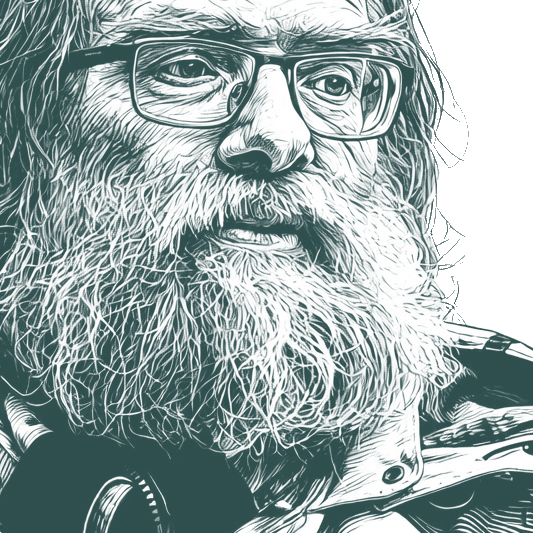
But if riots are deemed so important, surely attention is paid to the far larger killing of the Sikhs in 1984 by Congress secularists; or to the East… - Koenraad Elst
""
But if riots are deemed so important, surely attention is paid to the far larger killing of the Sikhs in 1984 by Congress secularists; or to the East Bengali massacre of Hindus in 1971 that dwarfed all Indian communal killings since Independence combined? No, this book only notices killings when Hindus are (or can be portrayed as) the perpetrators.
Koenraad Elst (born 7 August 1959) is a Flemish right wing Hindutva author, known primarily for his support of the Out of India theory and the Hindutva movement. Scholars have accused him of harboring Islamophobia.
Distortive or even totally false reporting on communally sensitive issues is a well-entrenched feature of Indian journalism. There is no self-corrective mechanism in place to remedy this endemic culture of disinformation. No reporter or columnist or editor ever gets fired or formally reprimanded or even just criticized by his peers for smearing Hindus. This way, a partisan economy with the truth has become a habit hard to relinquish. And foreign correspondents used to trusting their Indian secularist sources have likewise developed a habit of swallowing and relaying highly distorted news stories. Usually, the creation of a false impression of the Indian communal situation is achieved without outright lies, relying rather on the silent treatment for inconvenient facts and a screaming overemphasis on convenient ones. (...) So, moral of the story: feel free to write lies about the Hindus. Even if you are found out, most of the public will never hear of it, and you will not be made to bear any consequences.(...) These days, noisy secularists lie in waiting for communal riots and elatedly jump at them when and where they erupt. They exploit the anti-Hindu propaganda value of riots to the hilt, making up fictional stories as they go along to compensate for any defects in the true account. John Dayal is welcomed to Congressional committees in Washington DC as a crown witness to canards such as how Hindus are raping Catholic nuns in Jhabua, an allegation long refuted in a report by the Congress state government of Madhya Pradesh and more recently in the court verdict on the matter. Arundhati Roy goes lyrical about the torture of a Muslim politician's two daughters by Hindus during the Gujarat riots of 2002, even when the man had only one daughter, who came forward to clarify that she happened to be in the US at the time of the “facts”. Harsh Mander has already been condemned by the Press Council of India for spreading false rumours about alleged Hindu atrocities in his famous column Hindustan Hamara. Teesta Setalwad has reportedly pressured eyewitnesses to give the desired incriminating testimony against Hindus in the Gujarat riots.
The last jihad against the Hindus before the full establishment of British rule was waged by Tipu Sultan at the end of the 18th century. In the rebellion of 1857, the near-defunct Muslim dynasties (Moghuls, Nawabs) tried to curry favour with their Hindu subjects and neighbours, in order to launch a joint effort to re-establish their rule. For instance, the Nawab promised to give the Hindus the Ram Janmabhoomi/Babri Masjid site back, in an effort to quench their anti-Muslim animosity and redirect their attention towards the new common enemy from Britain. This is the only instance in modern history when Muslims offered concessions to the Hindus; after that, all the concessions made for the sake of communal harmony were a one-way traffic from Hindu to Muslim.
The political equation behind all this intrigue is rarely understood by non-Indians. Thus, it requires quite a historical excursus to explain why declared Marxists like Irfan Habib, R.S. Sharma and Romila Thapar are making common cause with Islamic fundamentalism in its struggle against Hindu pluralism.