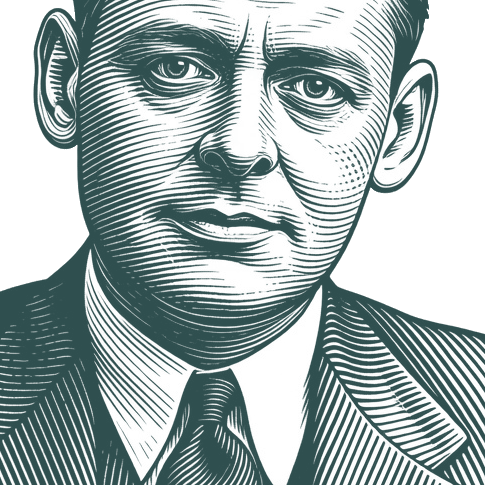
Thomas Stearns Eliot (26 September 1888 – 4 January 1965) was an American-born English poet, dramatist and literary critic. Noted for spiritual and religious themes in many of his poems, he converted from Unitarianism to Anglicanism in 1927.
Biography information from
Wikiquote·
Portrait adapted from
Wikimedia Commons, Thomas Stearns Eliot with his sister and his cousin by Lady Ottoline Morrell.jpg: Lady Ottoline Morrell (1873–1938) derivative work: Octave.H (Public domain / CC0)
Also Known As
Birth Name:
Thomas Stearns Eliot
Alternative Names:
Eliot
•
T S Eliot
•
Thomas Eliot
•
T.S. Eliot
Portrait from Wikimedia Commons. Credit: Thomas Stearns Eliot with his sister and his cousin by Lady Ottoline Morrell.jpg: Lady Ottoline Morrell (1873–1938) derivative work: Octave.H. Used under Public domain / CC0. Processed and styled by Quotewise.
Go Premium
Support Quotewise while enjoying an ad-free experience and premium features.
And I have known the eyes already, known them all — The eyes that fix you in a formulated phrase, And when I am formulated, sprawling on a pin, When I am pinned and wriggling on the wall, Then how should I begin To spit out all the butt-ends of my days and ways?
Blessed sister, holy mother, spirit of the fountain, spirit of the garden, Suffer us not to mock ourselves with falsehood Teach us to care and not to care
Where is the Life we have lost in living? Where is the wisdom we have lost in knowledge? Where is the knowledge we have lost in information?