"The forsaking of all others is a keeping of faith, not just with the chosen one, but with the ones forsaken. The marriage vow unites not just a woma… - Wendell Berry

"The forsaking of all others is a keeping of faith, not just with the chosen one, but with the ones forsaken. The marriage vow unites not just a woman and a man with each other; it unites each of them with the community in a vow of sexual responsibility toward all others. The whole community is married, realizes its essential unity, in each of its marriages...
Marital fidelity, that is, involves the public or institutional as well as the private aspect of marriage. One is married to marriage as well as to one's spouse. But one is married also to something vital of one's own that does not exist before the marriage: one's given word. It now seems to me that the modern misunderstanding of marriage involves a gross misunderstanding and underestimation of the seriousness of giving one's word, and of the dangers of breaking it once it is given. Adultery and divorce now must be looked upon as instances of that disease of word-breaking, which our age justifies as "realistic" or "practical" or "necessary," but which is tattering the invariably single fabric of speech and trust.
(pg.117, "The Body and the Earth")"
English
Collect this quote

About Wendell Berry

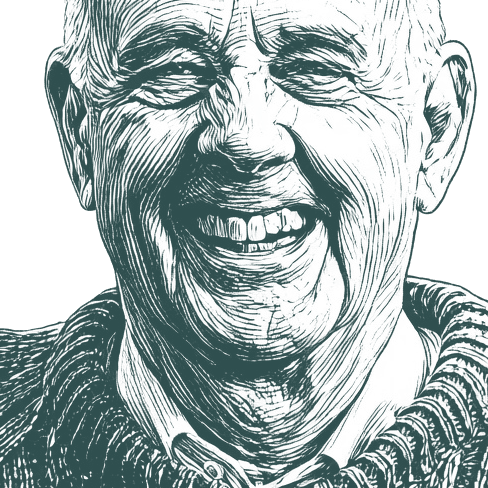
Wendell Berry (born 5 August 1934) is an American philosopher, poet, essayist, farmer, novelist and social activist.

Biography information from Wikiquote

Also Known As

Alternative Names: Wendell Erdman Berry
Go Premium

Support Quotewise while enjoying an ad-free experience and premium features.

View Plans

Related quotes. More quotes will automatically load as you scroll down, or you can use the load more buttons.

Additional quotes by Wendell Berry

It is impossible to see how good work might be accomplished by people who think that our life in this world either signifies nothing or has only a negative significance.
If, on the other hand, we believe that we are living souls, God's dust and God's breath, acting our parts among other creatures all made of the same dust and breath as ourselves; and if we understand that we are free, within the obvious limits of moral human life, to do evil or good to ourselves and to the other creatures - then all our acts have a supreme significance. If it is true that we are living souls and morally free, then all of us are artists. All of us are makers, within mortal terms and limits, of our lives, of one another's lives, of things we need and use...
If we think of ourselves as living souls, immortal creatures, living in the midst of a Creation that is mostly mysterious, and if we see that everything we make or do cannot help but have an everlasting significance for ourselves, for others, and for the world, then we see why some religious teachers have understood work as a form of prayer...
Work connects us both to Creation and to eternity. (pg. 316, Christianity and the Survival of Creation)

Works in ChatGPT, Claude, or Any AI

Add semantic quote search to your AI assistant via MCP. One command setup.

"Marriage, in what is evidently its most popular version, is now on the one hand an intimate 'relationship' involving (ideally) two successful careerists in the same bed, and on the other hand a sort of private political system in which rights and interests must be constantly asserted and defended. Marriage, in other words, has now taken the form of divorce: a prolonged and impassioned negotiation as to how things shall be divided. During their understandably temporary association, the 'married' couple will typically consume a large quantity of merchandise and a large portion of each other.

The modern household is the place where the consumptive couple do their consuming. Nothing productive is done there. Such work as is done there is done at the expense of the resident couple or family, and to the profit of suppliers of energy and household technology. For entertainment, the inmates consume television or purchase other consumable diversion elsewhere.

There are, however, still some married couples who understand themselves as belonging to their marriage, to each other, and to their children. What they have they have in common, and so, to them, helping each other does not seem merely to damage their ability to compete against each other. To them, 'mine' is not so powerful or necessary a pronoun as 'ours.'

This sort of marriage usually has at its heart a household that is to some extent productive. The couple, that is, makes around itself a household economy that involves the work of both wife and husband, that gives them a measure of economic independence and self-employment, a measure of freedom, as well as a common ground and a common satisfaction.

(From "Feminism, the Body, and the Machine")"

Loading...