Unlimited Quote Collections
Organize your favorite quotes without limits. Create themed collections for every occasion with Premium.
" "...Genuine pathological openness is about as seductive as Tourette's Syndrome.
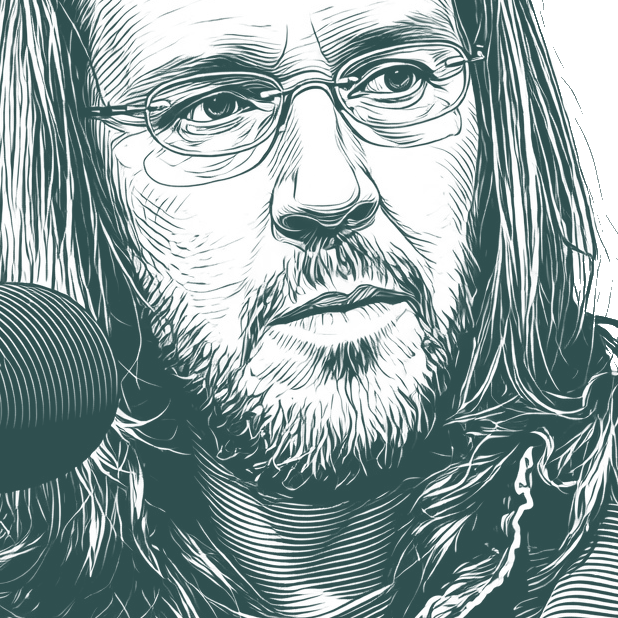
David Foster Wallace (21 February 1962 – 12 September 2008) was an American novelist, essayist, and short story writer. His works include The Broom of the System (novel), Infinite Jest (novel), The Girl With Curious Hair (short story collection), Brief Interviews with Hideous Men (short story collection), A Supposedly Fun Thing I'll Never Do Again (essay collection), and the posthumously-published The Pale King (novel) and Both Flesh and Not (essay collection).
Biography information from Wikiquote
Organize your favorite quotes without limits. Create themed collections for every occasion with Premium.
Related quotes. More quotes will automatically load as you scroll down, or you can use the load more buttons.
The emergence of something called Metafiction in the American '60s was hailed by academic critics as a radical aesthetic, a whole new literary form, literature unshackled from the cultural cinctures of mimetic narrative and free to plunge into reflexivity and self-conscious meditations on aboutness. Radical it may have been, but thinking that postmodern Metafiction evolved unconscious of prior changes in readerly taste is about as innocent as thinking that all those college students we saw on television protesting the Vietnam war were protesting only because they hated the Vietnam war (They may have hated the war, but they also wanted to be seen protesting on television. TV was where they'd seen the war, after all. Why wouldn't they go about hating it on the very medium that made their hate possible?) Metafictionists may have had aesthetic theories out the bazoo, but they were also sentient citizens of a community that was exchanging an old idea of itself as a nation of do-ers and be-ers for a new vision of the U.S.A. as an atomized mass of self-conscious watchers and appearers. For Metafiction, in its ascendant and most important phases, was really nothing more than a single-order expansion of its own theoretical nemesis, Realism: if Realism called it like it saw it, Metafiction simply called it as it saw itself seeing it. This high-cultural postmodern genre, in other words, was deeply informed by the emergence of television and the metastasis of self-conscious watching.
That distinctive singular stamp of himself is one of the main reasons readers come to love an author. The way you can just tell, often within a couple paragraphs, that something is by Dickens, or Chekhov, or Woolf, or Salinger, or Coetzee, or Ozick. The quality’s almost impossible to describe or account for straight out — it mostly presents as a vibe, a kind of perfume of sensibility — and critics’ attempts to reduce it to questions of “style” are almost universally lame.