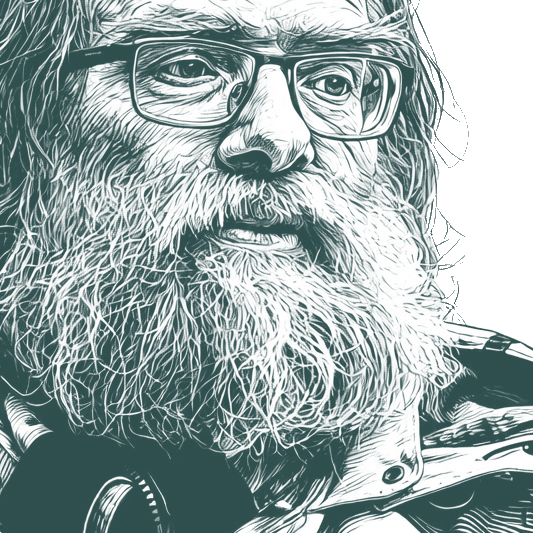
So, this is where the story comes from: an unnamed friend of an unnamed acquaintance of Sitaramayya knew of a manuscript, but he took the details of … - Koenraad Elst
""
So, this is where the story comes from: an unnamed friend of an unnamed acquaintance of Sitaramayya knew of a manuscript, but he took the details of it with him in his grave. This hearsay in the third degree is the “document” on which secularist journalists and historians base their “evidence” of Aurangzeb’s fair and secularist disposition. This is how they go about “exploding the myth” of Islamic iconoclasm. Their “debunking” of genuine history as preserved and presented by Hindu historians stands exposed as sheer bluff.
English
Collect this quote
About
Koenraad Elst
Koenraad Elst (born 7 August 1959) is a Flemish right wing Hindutva author, known primarily for his support of the Out of India theory and the Hindutva movement. Scholars have accused him of harboring Islamophobia.
Dr. Ambedkar has become a saint, and his opinions can now only be recited and quoted as final authority, but not subjected to any criticism on penalty of being dubbed "Brahminical reactionary".
I wrote twelve years earlier about Islam, and the primary reason for this was a meeting in Varanasi in 1988 with a family of refugees from Bangladesh, who after intense persuasion told me with great difficulty the story of their persecution by their Muslim neighbors.
Try QuoteGPT
Chat naturally about what you need. Each answer links back to real quotes with citations.
In his seminal book Hindu Temples: What Happened to Them, independent Hindu historian Sita Ram Goel has listed two thousand cases where a mosque was built in forcible replacement of a Hindu temple. Not one of these verifiable items has been proven false, not by Sikand nor by Eaton or other eminent historians. It is also instructive to see for oneself what Eaton's purported eighty cases are, on pp. 128-132 of his book. These turn out not to concern individual places of worship, but campaigns of destruction affecting whole cities with numerous temples at once. Among the items on Eaton's list, we find Delhi under Mohammed Ghori's onslaught, 1193, or Benares under the Ghurid conquest, 1194, and again under Aurangzeb's temple-destruction campaign, 1669. On each of these three occasions, literally hundreds of temples were sacked. In the case of Delhi, we all know how the single Quwwat-ul-Islam mosque replaced 27 temples, incorporating their rubble. At this rate, Eaton's eighty instances easily match Goel's two thousand, perhaps even the unnamed Hindutva author's sixty thousand.