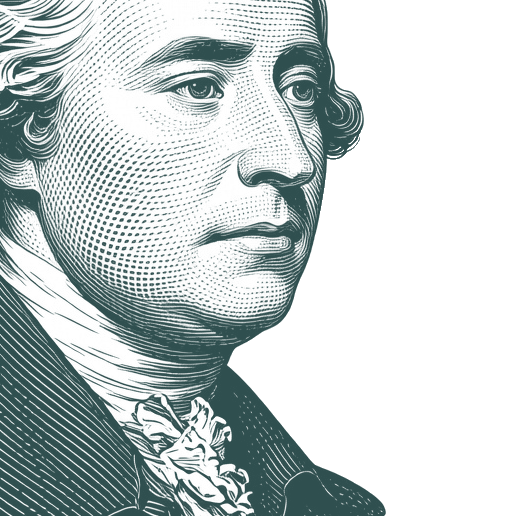
Human reason reduced to its own resources is perfectly worthless, not only for creating but also for preserving any political or religious associatio… - Edmund Burke
""
Human reason reduced to its own resources is perfectly worthless, not only for creating but also for preserving any political or religious association, because it only produces disputes, and, to conduct himself well, man needs not problems but beliefs. His cradle should be surrounded by dogmas, and when his reason is awakened, it should find all his opinions ready-made, at least all those relating to his conduct. Nothing is so important to him as prejudices.
English
Collect this quote
About
Edmund Burke
Edmund Burke (12 January 1729 – 9 July 1797) was a British and Irish statesman and philosopher. Born in Dublin, Burke served as a member of parliament (MP) between 1766 and 1794 in the House of Commons of Great Britain with the Whig Party after moving to London in 1750.
Biography information from
Wikiquote·
Portrait adapted from
Wikimedia Commons, Joshua Reynolds (Public domain / CC0)
Liberty, if I understand it at all, is a general principle, and the clear right of all the subjects within the realm, or of none. Partial freedom seems to me a most invidious mode of slavery. But, unfortunately, it is the kind of slavery the most easily admitted in times of civil discord; for parties are but too apt to forget their own future safety in their desire of sacrificing their enemies. People without much difficulty admit the entrance of that injustice of which they are not to be the immediate victims. In times of high proceeding it is never the faction of the predominant power that is in danger: for no tyranny chastises its own instruments. It is the obnoxious and the suspected who want the protection of law; and there is nothing to bridle the partial violence of state factions, but this; “that whenever an act is made for a cessation of law and justice, the whole people should be universally subjected to the same suspension of their franchises.” The alarm of such a proceeding would then be universal. It would operate as a sort of Call of the nation. It would become every man's immediate and instant concern to be made very sensible of the absolute necessity of this total eclipse of liberty. They would more carefully advert to every renewal, and more powerfully resist it. These great determined measures are not commonly so dangerous to freedom. They are marked with too strong lines to slide into use. No plea, nor pretence, of inconvenience or evil example (which must in their nature be daily and ordinary incidents) can be admitted as a reason for such mighty operations. But the true danger is, when liberty is nibbled away, for expedients, and by parts. The Habeas Corpus act supposes, contrary to the genius of most other laws, that the lawful magistrate may see particular men with a malignant eye, and it provides for that identical case. But when men, in particular descriptions, marked out by the magistrate himself, are delivered over by parliament to this possible malignity, it is not the Habeas Corpus that is occasionally suspended, but its spirit that is mistaken, and its principle that is subverted. Indeed nothing is security to any individual but the common interest of all.