Well, although I do not suppose that either of us knows anything really beautiful and good, I am better off than he is, — for he knows nothing, and t… - Socrates
""
Well, although I do not suppose that either of us knows anything really beautiful and good, I am better off than he is, — for he knows nothing, and thinks that he knows; I neither know nor think that I know.
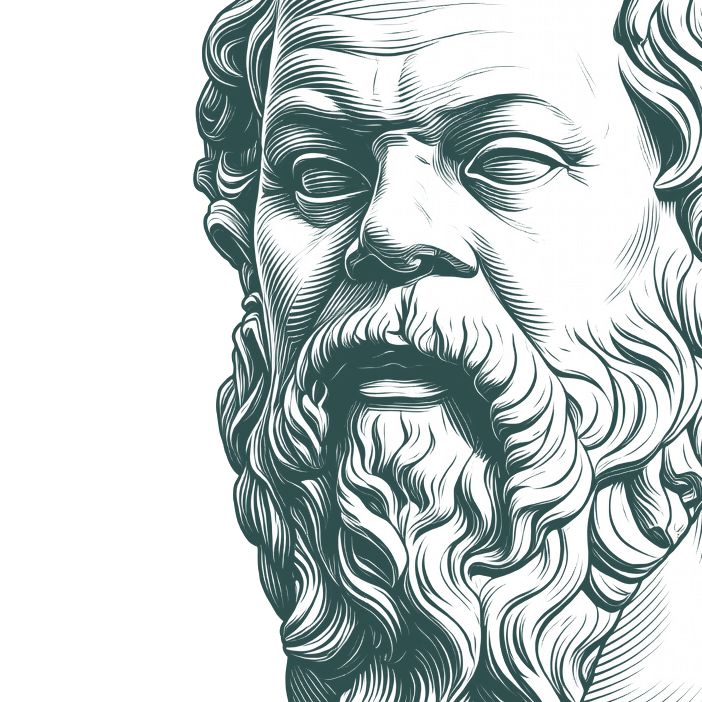
Socrates (Σωκράτης; c. 470 BC – 399 BC) was a classical Greek (Athenian) philosopher credited as one of the founders of Western philosophy. Through his portrayal in Plato's dialogues, Socrates has become renowned for his contribution to the field of ethics, and it is this Platonic Socrates who lends his name to the concepts of Socratic irony and the Socratic method, or elenchus. The latter remains a commonly used tool in a wide range of discussions, and is a type of pedagogy in which a series of questions is asked not only to draw individual answers, but also to encourage fundamental insight into the issue at hand.
Biography information from
Wikiquote·
Portrait adapted from
Wikimedia Commons, Copy of Lysippos (?) (Public domain / CC0)
And this, Cebes, is the reason why the true lovers of knowledge are temperate and brave; and not for the reason that the world gives. For not in that way does the soul of a philosopher reason. ...Never fear, Simmias and Cebes, that a soul which has been thus nurtured and has had these pursuits, will at her departure from the body be scattered and blown away by the winds and be nowhere and nothing.
If it were said that without such bones and sinews and all the rest of them I should not be able to do what I think is right, it would be true; but to say that it is because of them that I do what I am doing, and not through choice of what is best - although my actions are controlled by Mind - would be a very lax and inaccurate form of expression.
Enhance Your Quote Experience
Enjoy ad-free browsing, unlimited collections, and advanced search features with Premium.