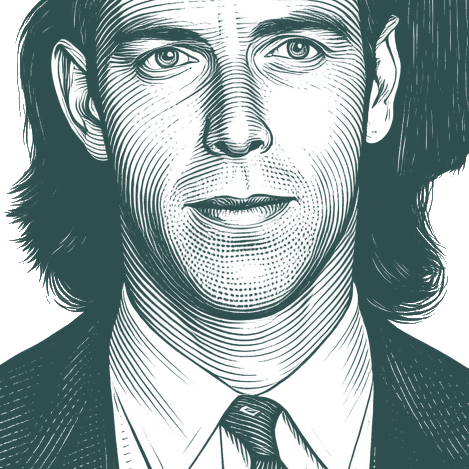
"For there is no joy in continuity, in the perpetual. We desire it only because the present is empty. A person who is trying to eat money is always h… - Alan Watts
"For there is no joy in continuity, in the perpetual. We desire it only because the present is empty. A person who is trying to eat money is always hungry. When someone says, "Time to stop now!" he is in a panic because he has had nothing to eat yet, and wants more and more time to go on eating money, ever hopeful of satisfaction around the corner. We do not really want continuity, but rather a present experience of total happiness. The thought of wanting such an experience to go on and on is a result of being self-conscious in the experience, and thus incompletely aware of it. So long as there is the feeling of an "I" having this experience, the moment is not all. Eternal life is realized when the last trace of difference between "I" and "now" has vanished - when there is just this "now" and nothing else. By contrast, hell or "everlasting damnation" is not the everlastingness of time going on forever, but of the unbroken circle, the continuity and frustration of going round and round in pursuit of something which can never be attained. Hell is the fatuity, the everlasting impossibility, of self-love, self-consciousness, and self-possession. It is trying to see one´s own eyes, hear one´s own ears, and kiss one´s own lips."
Alan Wilson Watts (6 January 1915 – 16 November 1973) was an English philosopher, writer, speaker, and expert in comparative religion.
Biography information from
Wikiquote·
Portrait adapted from
Wikimedia Commons, The University of Vermont Alumni Magazine vol. 39 no. 01, p. 22. (Public domain / CC0)
Also Known As
Alternative Names:
Alan Wilson Watts
•
Alan W. Watts
If I first see a tree in the winter, I might assume that it is not a fruit-tree. But when I return in the summer to find it covered with plums, I must exclaim, 'Excuse me! You were a fruit-tree after all.' Imagine, then, that a billion years ago some beings from another part of the galaxy made a tour through the solar system in their flying saucer and found no life. They would dismiss it as 'Just a bunch of old rocks!' But if they returned today, they would have to apologize: 'Well - you were peopling rocks after all!' You may, of course, argue that there is no analogy between the two situations. The fruit-tree was at one time a seed inside a plum, but the earth - much less the solar system or the galaxy - was never a seed inside a person. But, oddly enough, you would be wrong.
In this respect, the Chinese written language has a slight advantage over our own, and is perhaps symptomatic of a different way of thinking. It is still linear, still a series of abstractions taken in one at a time. But its written signs are a little closer to life than spelled words because they are essentially pictures, and, as a Chinese proverb puts it, “One showing is worth a hundred sayings.” Compare, for example, the ease of showing someone how to tie a complex knot with the difficulty of telling him how to do it in words alone.
Limited Time Offer
Premium members can get their quote collection automatically imported into their Quotewise collections.