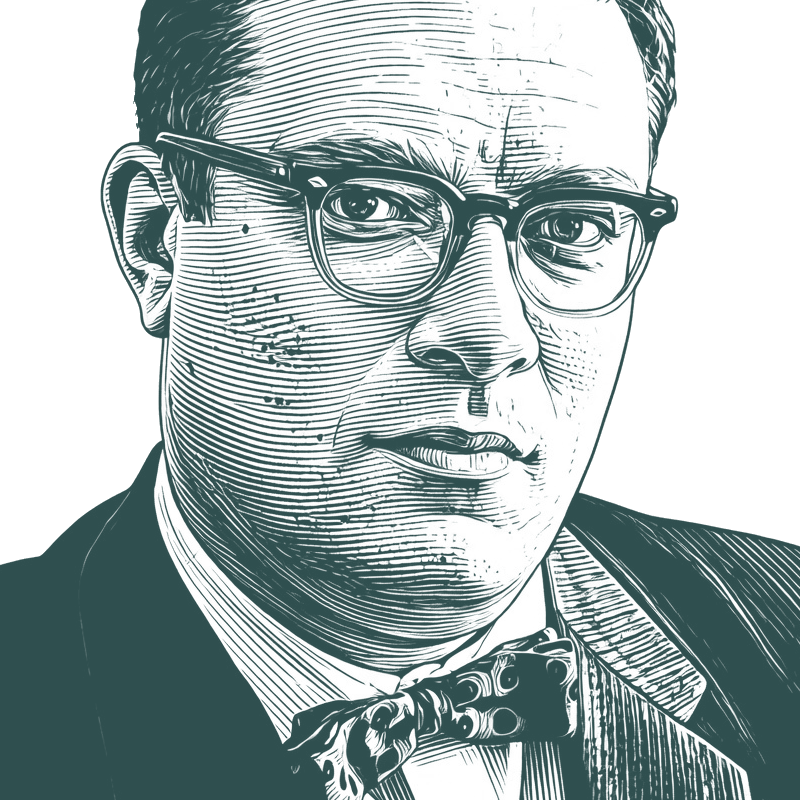
Isaac Asimov (c. 2 January 1920 – 6 April 1992) was a Russian-born American biochemist who was a prolific writer of both fiction and non-fiction, his works include the Foundation series and I, Robot.
Biography information from
Wikiquote·
Portrait adapted from
Wikimedia Commons, Phillip Leonian [1] from New York World-Telegram & Sun.[2] (Public domain / CC0)
Also Known As
Alternative Names:
Isaak Osimov
•
Paul French
•
Asimov
•
Isaak Ozimov
•
Itzhak Ozimov
Portrait from Wikimedia Commons. Credit: Phillip Leonian [1] from New York World-Telegram & Sun.[2]. Used under Public domain / CC0. Processed and styled by Quotewise.
Works in ChatGPT, Claude, or Any AI
Add semantic quote search to your AI assistant via MCP. One command setup.
The trouble with you, Peter, is that when you think of a witness to a planetological statement, you think of planetologists. You divide up human beings into categories, and despise and dismiss most. A robot cannot do that. The First Law says, 'A robot may not injure a human being or, through inaction, allow a human being to come to harm.' Any human being. That is the essence of the robotic view of life. A robot makes no distinction. To a robot, all men are truly equal, and to a robopsychologist who must perforce deal with men at the robotic level, all men are truly equal, too.
He shames me for being what I am without fear of loss, when he is what he is without hope of gain.
"A good reference book, the Columbia Encyclopedia. Best one-volume all-round reference in the world and more useful than the Britannica, even if it does waste an entry on Isaac Asimov."
"On whom?" asked Gonzalo.
"Asimov. Friend of mine. Science fiction writer and pathologically conceited. He carries a copy of the Encyclopedia to parties and says, 'Talking of concrete, the Columbia Encyclopedia has an excellent article on it only 249 pages after their article on me. Let me show you.' Then he shows them the article on himself."