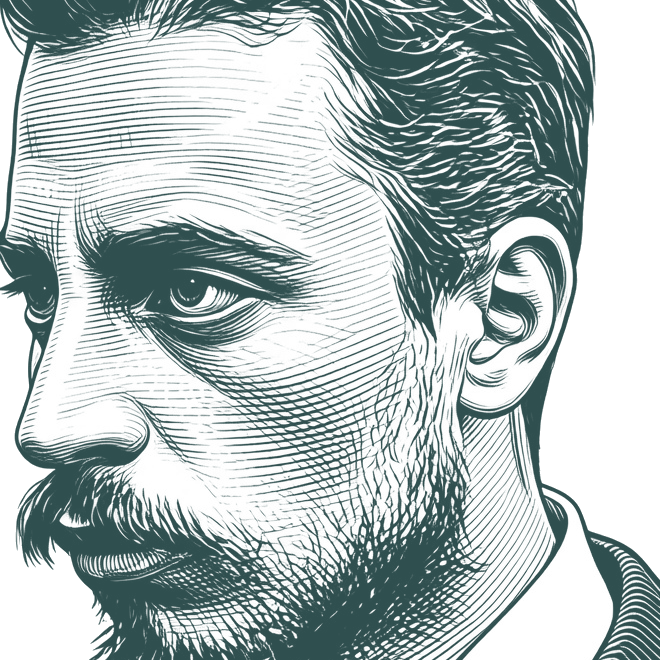
Du im Voraus verlorne Geliebte, Nimmergekommene, nicht weiß ich, welche Töne dir lieb sind. Nicht mehr versuch ich, dich, wenn das Kommende wogt, zu … - Rainer Maria Rilke

" "

Du im Voraus verlorne Geliebte, Nimmergekommene, nicht weiß ich, welche Töne dir lieb sind. Nicht mehr versuch ich, dich, wenn das Kommende wogt, zu erkennen.

German
Collect this quote

About Rainer Maria Rilke

René Karl Wilhelm Johann Josef Maria Rilke (4 December 1875 – 29 December 1926), better known as Rainer Maria Rilke, was a Bohemian-Austrian poet and novelist, generally considered the German language's greatest poet of the 20th century. His writings include one novel, several collections of poetry and several volumes of correspondence in which he invokes images that focus on the difficulty of communion with the ineffable in an age of disbelief, solitude and anxiety. These themes position him as a transitional figure between traditional and modernist writers.

Biography information from Wikiquote

Also Known As

Alternative Names: René Karl Wilhelm Johann Josef Maria Rilke René Maria Cäsar Rilke Rainer Karl Wilhelm Johann Josef Maria Rilke Li-erh-kʻo Rainer Maria Rielke René Rilke Rainer Mariyah Rilḳeh Rainŏ Maria Rilkʻe Reiner Marie Rilke Rene Karl Wilhelm Johann Josef Maria Rilke Rene Rilke
Go Premium

Support Quotewise while enjoying an ad-free experience and premium features.

View Plans

Related quotes. More quotes will automatically load as you scroll down, or you can use the load more buttons.

Additional quotes by Rainer Maria Rilke

It seems to me that almost all our sadnesses are moments of tension, which we feel as paralysis because we no longer hear our astonished emotions living. Because we are alone with the unfamiliar presence that has entered us; because everything we trust and are used to is for a moment taken away from us; because we stand in the midst of a transition where we cannot remain standing. That is why the sadness passes: the new presence inside us, the presence that has been added, has entered our heart, has gone into its innermost chamber and is no longer even there, - is already in our bloodstream. And we don't know what it was. We could easily be made to believe that nothing happened, and yet we have changed, as a house that a guest has entered changes. We can't say who has come, perhaps we will never know, but many signs indicate that the future enters us in this way in order to be transformed in us, long before it happens. And that is why it is so important to be solitary and attentive when one is sad: because the seemingly uneventful and motionless moment when our future steps into us is so much closer to life than that other loud and accidental point of time when it happens to us as if from outside. The quieter we are, the more patient and open we are in our sadnesses, the more deeply and serenely the new presence can enter us, and the more we can make it our own, the more it becomes our fate.

Physical pleasure is a sensual experience no different from pure seeing or the pure sensation with which a fine fruit fills the tongue; it is a great unending experience, which is given us, a knowing of the world, the fullness and the glory of all knowing. And not our acceptance of it is bad; the bad thing is that most people misuse and squander this experience and apply it as a stimulant at the tired spots of their lives and as distraction instead of a rallying toward exalted moments.

Go Premium

Support Quotewise while enjoying an ad-free experience and premium features.

View Plans
I am so afraid of people's words. They describe so distinctly everything: And this they call dog and that they call house, here the start and there the end. I worry about their mockery with words, they know everything, what will be, what was; no mountain is still miraculous; and their house and yard lead right up to God. I want to warn and object: Let the things be! I enjoy listening to the sound they are making. But you always touch: and they hush and stand still. That's how you kill.

Loading...