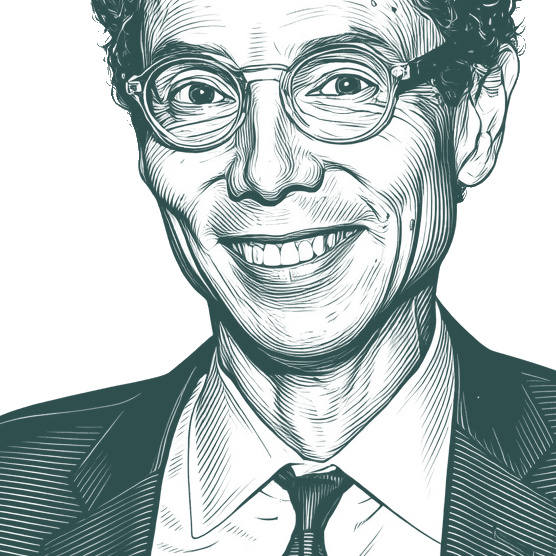
This is the gift of training and expertise — the ability to extract an enormous amount of meaningful information from the very thinnest slice of expe… - Malcolm Gladwell
""
This is the gift of training and expertise — the ability to extract an enormous amount of meaningful information from the very thinnest slice of experience.
English
Collect this quote
About
Malcolm Gladwell
Malcolm Timothy Gladwell (born September 3, 1963) is an English-born Canadian journalist, bestselling author, and speaker. He has been a staff writer for The New Yorker since 1996.
Biography information from
Wikiquote·
Portrait adapted from
Wikimedia Commons, PEN American Center (CC BY)
potatoes, melons, and fruit trees in the long backyards behind their houses. He gave out seeds and bulbs. The town came to life. The Rosetans began raising pigs in their backyards and growing grapes for homemade wine. Schools, a park, a convent, and a cemetery were built. Small shops and bakeries and restaurants and bars opened along Garibaldi Avenue. More than a dozen factories sprang up making blouses for the garment trade. Neighboring Bangor was largely Welsh and English, and the next town over was overwhelmingly German, which meant — given
When Tom Gau and I sat across from each other in his office, then, we almost immediately fell into physical and conversational harmony. We were dancing. Even before he attempted to persuade me with his words, he had forged a bond with me with his movements and his speech.
Go Premium
Support Quotewise while enjoying an ad-free experience and premium features.
We tend to judge people’s honesty based on their demeanor. Well-spoken, confident people with a firm handshake who are friendly and engaging are seen as believable. Nervous, shifty, stammering, uncomfortable people who give windy, convoluted explanations aren’t. In a survey of attitudes toward deception conducted a few years ago, which involved thousands of people in fifty-eight countries around the world, 63 percent of those asked said the cue they most used to spot a liar was “gaze aversion.” We think liars in real life behave like liars would on Friends — telegraphing their internal states with squirming and darting eyes. This is — to put it mildly — nonsense. Liars don’t look away. But Levine’s point is that our stubborn belief in some set of nonverbal behaviors associated with deception explains the pattern he finds with his lying tapes. The people we all get right are the ones who match — whose level of truthfulness happens to correspond with the way they look.