Canadian journalist and science writer
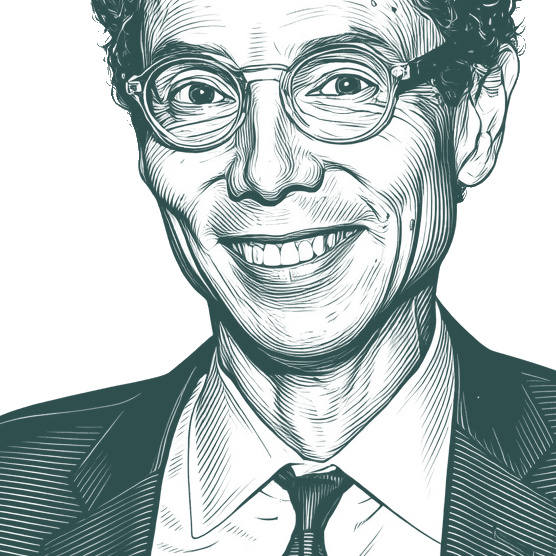
Malcolm Timothy Gladwell (born September 3, 1963) is an English-born Canadian journalist, bestselling author, and speaker. He has been a staff writer for The New Yorker since 1996.
Bio from: Wikiquote (CC BY-SA 4.0) · Portrait adapted from: Wikimedia Commons, PEN American Center (CC BY)
From Wikidata (CC0)
Cultures of honor tend to take root in highlands and other marginally fertile areas, such as Sicily or the mountainous Basque regions of Spain. If you live on some rocky mountainside, the explanation goes, you can't farm. You probably raise goats or sheep, and the kind of culture that grows up around being a herdsman is very different from the culture that grows up around growing crops. The survival of a farmer depends on the cooperation of others in the community. But a herdsman is off by himself. Farmers also don't have to worry that their livelihood will be stolen in the night, because crops can't easily be stolen unless, of course, a thief wants to go to the trouble of harvesting an entire field on his own. But a herdsman does have to worry. He's under constant threat of ruin through the loss of his animals. So he has to be aggressive: he has to make it clear, through his words and deeds, that he is not weak.
The conviction that we know others better than they know us — and that we may have insights about them they lack (but not vice versa) — leads us to talk when we would do well to listen and to be less patient than we ought to be when others express the conviction that they are the ones who are being misunderstood or judged unfairly. The same convictions can make us reluctant to take advice from others who cannot know our private thoughts, feelings, interpretations of events, or motives, but all too willing to give advice to others based on our views of their past behavior, without adequate attention to their thoughts, feelings, interpretations, and motives. Indeed, the biases documented here may create a barrier to the type of exchanges of information, and especially to the type of careful and respectful listening, that can go a long way to attenuating the feelings of frustration and resentment that accompany interpersonal and intergroup conflict.
Try QuoteGPT
Chat naturally about what you need. Each answer links back to real quotes with citations.
Eric Hanushek, an economist at Stanford, estimates that the students of a very bad teacher will learn, on average, half a year’s worth of material in one school year. The students in the class of a very good teacher will learn a year and a half’s worth of material. That difference amounts to a year’s worth of learning in a single year. Teacher effects dwarf school effects: your child is actually better off in a bad school with an excellent teacher than in an excellent school with a bad teacher.
he waits for the kid to decide whether to pull the gun up or simply to drop it - and all the while, even as he tracks the progress of the gun, he is also watching the kid's face, to see whether he is dangerous or simply frightened. is there a more beautiful example of a snap judgment? this is the gift of training and expertise - the ability to extract an enormous amount of meaningful information from the very thinnest slice of experience.
The sense of possibility so necessary for success comes not just from inside us or from our parents. It comes from our time: from the particular opportunities that our particular place in history presents us with. For a young would-be lawyer, being born in the early 1930's was a magic time, just as being born in 1955 was for a software programmer, or being born in 1835 was for an entrepreneur.
Today we are now thrown into contact all the time with people whose assumptions, perspectives, and backgrounds are different from our own. The modern world is not two brothers feuding for control of the Ottoman Empire. It is Cortés and Montezuma struggling to understand each other through multiple layers of translators. Talking to Strangers is about why we are so bad at that act of translation.
innovators need to be disagreeable. By disagreeable, I don’t mean obnoxious or unpleasant. I mean that on that fifth dimension of the Big Five personality inventory, “agreeableness,” they tend to be on the far end of the continuum. They are people willing to take social risks — to do things that others might disapprove of.
...legitimacy is based on three things. First of all, the people who are asked to obey authority have to feel like they have a voice — that if they speak up, they will be heard. Second, the law has to be predictable. There has to be a reasonable expectation that the rules tomorrow are going to be roughly the same as the rules today. And third, the authority has to be fair. It can't treat one group differently from another.