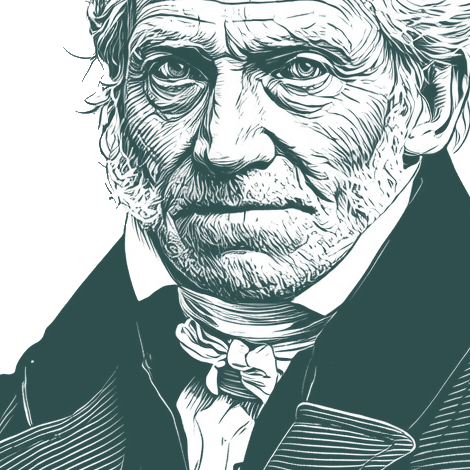
It is asserted that beasts have no rights; the illusion is harboured that our conduct, so far as they are concerned, has no moral significance, or, a… - Arthur Schopenhauer
""
It is asserted that beasts have no rights; the illusion is harboured that our conduct, so far as they are concerned, has no moral significance, or, as it is put in the language of these codes, that "there are no duties to be fulfilled towards animals." Such a view is one of revolting coarseness, a barbarism of the West, whose source is Judaism. In philosophy, however, it rests on the assumption, despite all evidence to the contrary, of the radical difference between man and beast,—a doctrine which, as is well known, was proclaimed with more trenchant emphasis by Descartes than by any one else: it was indeed the necessary consequence of his mistakes.
Arthur Schopenhauer (22 February 1788 – 21 September 1860) was a German philosopher, most famous for his work The World as Will and Representation (1819).
Biography information from
Wikiquote·
Portrait adapted from
Wikimedia Commons, Johann Schäfer (Public domain / CC0)
the brut first knows death when it dies, but man draws consciously nearer to it every hour that he lives; and this makes his life at times a questionable good even to him who has not recognised this character of constant anaihilation in the whole of life.
Society is in this respect like a fire-the wise man warming himself at a proper distance from it; not coming too close, like the fool, who, on getting scorched, runs away and shivers in solitude, loud in his complaint that the fire burns.
PREMIUM FEATURE
Advanced Search Filters
Filter search results by source, date, and more with our premium search tools.