Lying in bed would be an altogether perfect and supreme experience if only one had a colored pencil long enough to draw on the ceiling. This, however… - G. K. Chesterton
""
Lying in bed would be an altogether perfect and supreme experience if only one had a colored pencil long enough to draw on the ceiling. This, however, is not generally a part of the domestic apparatus on the premises. I think myself that the thing might be managed with several pails of Aspinall and a broom. Only if one worked in a really sweeping and masterly way, and laid on the color in great washes, it might drip down again on one's face in floods of rich and mingled color like some strange fairy rain; and that would have its disadvantages. I am afraid it would be necessary to stick to black and white in this form of artistic composition. To that purpose, indeed, the white ceiling would be of the greatest possible use; in fact, it is the only use I think of a white ceiling being put to.
Gilbert Keith Chesterton (29 May 1874 – 14 June 1936) was a British writer whose prolific and diverse output included works of philosophy, ontology, poetry, play writing, journalism, public lecturing and debating, literary and art criticism, biography, Christian apologetics (particularly for Catholicism), and fiction, including fantasy and detective fiction. He has been called the "prince of paradox".
Biography information from
Wikiquote·
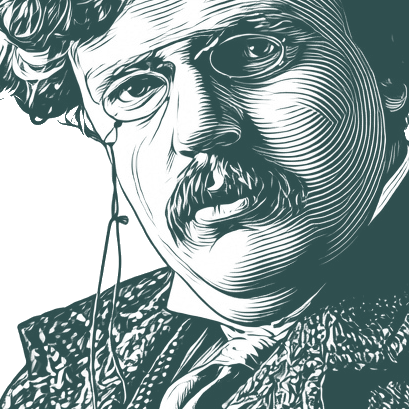
Portrait adapted from
Wikimedia Commons, Ernest Herbert Mills (Public domain / CC0)
Also Known As
Native Name:
Gilbert Keith Chesterton
Alternative Names:
František Kafka
•
Kafka
•
Gilbert K. Chesterton
•
Gilbert Chesterton
•
G.K. Chesterton
•
G. K. C.
It is the custom in our little epoch to sneer at the middle classes. Cockney artists profess to find the bourgeoisie dull; as if artists had any business to find anything dull. Decadents talk contemptuously of its conventions and its set tasks; it never occurs to them that conventions and set tasks are the very way to keep that greenness in the grass and that redness in the roses--which they have lost forever.
There is a thought that stops thought. That is the only thought that ought to be stopped.
Try QuoteGPT
Chat naturally about what you need. Each answer links back to real quotes with citations.
The men of the East may spell the stars, And times and triumphs mark, But the men signed of the cross of Christ Go gaily in the dark.