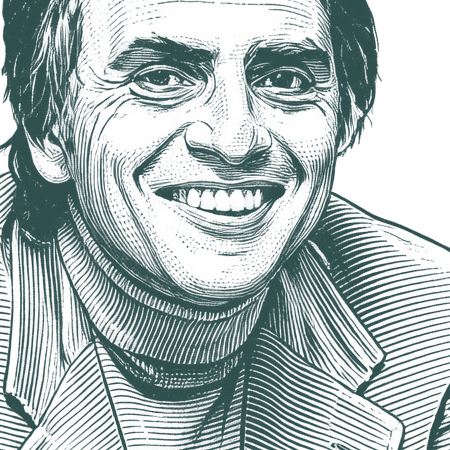
Numa vida curta e incerta, parece cruel fazer qualquer coisa que possa privar as pessoas do consolo da fé, quando a ciência não pode remediar a sua a… - Carl Sagan
""
Numa vida curta e incerta, parece cruel fazer qualquer coisa que possa privar as pessoas do consolo da fé, quando a ciência não pode remediar a sua angústia. Aqueles que não conseguem suportar o peso da ciência têm a liberdade de ignorar os seus preceitos. Mas não podemos fazer ciência aos pedacinhos, aplicando-a quando nos sentimentos seguros e ignorando-a quando nos sentimos ameaçados - mais uma vez, porque não temos sabedoria para tanto. A não ser dividindo a mente em compartimentos herméticos separados, como é possível voar em aeroplanos, escutar rádio ou tomar antibióticos, sustentando ao mesmo tempo que a Terra tem cerca de 10 mil anos ou que todos os sagitarianos são gregários e afáveis?
Portuguese
Collect this quote
About
Carl Sagan
Carl Edward Sagan (9 November 1934 – 20 December 1996) was an American astronomer, planetary scientist, cosmologist, astrophysicist, astrobiologist, author, and science communicator. His best known scientific contribution is research on extraterrestrial life, including experimental demonstration of the production of amino acids from basic chemicals by radiation. Sagan assembled the first physical messages sent into space, the Pioneer plaque and the Voyager Golden Record, universal messages that could potentially be understood by any extraterrestrial intelligence that might find them. Sagan argued the hypothesis, accepted since, that the high surface temperatures of Venus can be attributed to, and calculated using, the greenhouse effect. He testified to the US Congress in 1985 that the greenhouse effect will change the earth's climate system.
Biography information from
Wikiquote·
Portrait adapted from
Wikimedia Commons, NASA/JPL (Public domain / CC0)
Also Known As
Native Name:
Carl Edward Sagan
Alternative Names:
Sagan
•
Carl E. Sagan
•
Carl E Sagan
•
C. E. Sagan
•
C.E. Sagan
•
C E Sagan
•
C. Sagan
•
C Sagan
•
Sagan C
•
Sagan C.
•
Sagan C. E.
•
Sagan CE
İnsanoğlu Tanrı hakkındaki düşüncelerinin gerçekçi bir muhasebesini yapacak olursa, tanık olduğu olayların bilinmeyen, gizli kalan nedenlerini dile getirmek için çoğu zaman «tanrı» sözcüğünü kullandığını itiraf etmek zorunda kalır. Bu sözcüğü, nedenlerin kaynağını bulamadığı, doğal olanın kaynağı anlaşılır olmaktan çıktığı zaman kullanmaktadır. Ya da nedenleri birbirine bağlayan zincirin halkalarını kay beti iği anda, sonucu Tanrı'ya bağlayarak sorunu çözer ve araştırmasına son verir. Bu yüzden, bir şeyin oluşunu tanrılara bağladığında, aslında zihnindeki karanlığın yerini, hayret duygusuyla önünde eğildiği alışılmış bir sese terk etmekten başka bir şey mi yapıyor? — — - Bir avuç kumda yaklaşık 10.000 kum tanesi vardır. Göğün açık olduğu bir gecede çıplak gözle görebildiğimiz yıldız sayısından daha çoktur bir avuç kumdaki taneler. Ama görebildiğimiz yıldızlar, varolan yıldızların ancak küçücük bir bölümüdür. Geceleyin gördüklerimiz en yakın yıldızlardır. Oysa Kozmos ölçü kavramını aşan bir zenginliktedir; şöyle ki: Evrendeki yıldızların toplam sayısı yeryüzündeki tüm kumsallardaki kum tanelerinden daha çoktur. — — - Hindu dini, Kozmos’un çok sayıda, hatta sayısız ölüm ve yeniden doğuşlardan geçtiği inancına dayanan dünyanın tek dinidir. Zaman çerçevesinin, rastlantı sonucu da olsa, çağdaş bilimsel kozmolojiyle bağdaştığı tek din Hindu dinidir. Bu dine göre, evreler, yaşadığımız bir gün ve geceden itibaren 8.64 milyar yıl önceki bir Brahma günü ve gecesine kadar gidiyor. Bu süre yeryüzüyle Güneş’in yaşından daha uzundur. Büyük Patlamadan bu yana olan zamanın da yarısına yakındır.
There are naive questions, tedious questions, ill-phrased questions, questions put after inadequate self-criticism. But every question is a cry to understand the world. There is no such thing as a dumb question.
Unlimited Quote Collections
Organize your favorite quotes without limits. Create themed collections for every occasion with Premium.
There was a most revealing rule: Slaves were to remain illiterate. In the antebellum South, whites who taught a slave to read were severely punished. “[To] make a contented slave,” Bailey later wrote, “it is necessary to make a thoughtless one. It is necessary to darken his moral and mental vision, and, as far as possible, to annihilate the power of reason.” This is why the slaveholders must control what slaves hear and see and think. This is why reading and critical thinking are dangerous, indeed subversive, in an unjust society.