"We therefore work, not
for the work's sake, but for money — and money is supposed to get us
what we really want in our hours of leisure and play. In… - Alan Watts
"We therefore work, not for the work's sake, but for money — and money is supposed to get us what we really want in our hours of leisure and play. In the United States even poor people have lots of money compared with the wretched and skinny millions of India, Africa, and China, while our middle andupper classes (or should we say "income groups") are as prosperous as princes. Yet, by and large, they have but slight taste for pleasure. Money alone cannot buy pleasure, though it can help. For enjoyment is an art and a skill for which we have little talent or energy."
Alan Wilson Watts (6 January 1915 – 16 November 1973) was an English philosopher, writer, speaker, and expert in comparative religion.
Biography information from
Wikiquote·
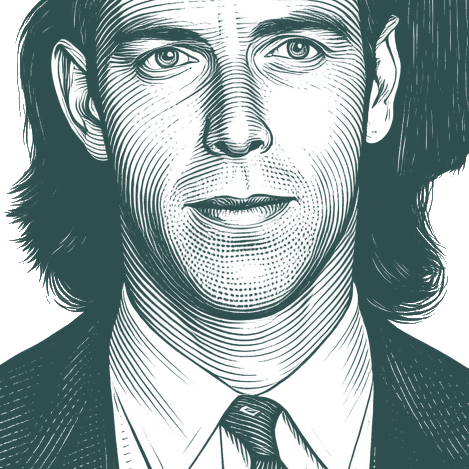
Portrait adapted from
Wikimedia Commons, The University of Vermont Alumni Magazine vol. 39 no. 01, p. 22. (Public domain / CC0)
Also Known As
Alternative Names:
Alan Wilson Watts
•
Alan W. Watts
Portrait from Wikimedia Commons. Credit: The University of Vermont Alumni Magazine vol. 39 no. 01, p. 22.. Used under Public domain / CC0. Processed and styled by Quotewise.
Limited Time Offer
Premium members can get their quote collection automatically imported into their Quotewise collections.
To be silent is not to lose your tongue. On the contrary, it is only through silence that one can discover something new to talk about. One who talked incessantly, without stopping to look and listen, would repeat himself ad nauseam.
The startling truth is that our best efforts for civil rights, international peace, population control, conservation of natural resources, and assistance to the starving of the earth — urgent as they are — will destroy rather than help if made in the present spirit. For, as things stand, we have nothing to give. If our own riches and our own way of life are not enjoyed here, they will not be enjoyed anywhere else.
For so sensitive a creature as man, art is natural. He does not care to masticate raw beef with hands and teeth, nor to make love with the same 'natural' unconcern as that with which he sneezes, nor to live in homes thrown together anyhow to keep out the wet and cold. Therefore there is almost always an art of love, whether it be as directly concerned with the sexual act as the Indian Kuma Sutra, or a preoccupation with the long preliminaries of wooing to which the sexual act itself is merely the final swift climax.