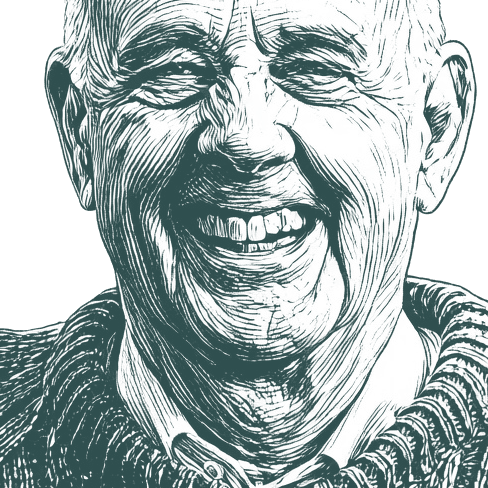
"Why do farmers farm, given their economic adversities on top of the many frustrations and difficulties normal to farming? And always the answer is: … - Wendell Berry
"Why do farmers farm, given their economic adversities on top of the many frustrations and difficulties normal to farming? And always the answer is: "Love. They must do it for love." Farmers farm for the love of farming. They love to watch and nurture the growth of plants. They love to live in the presence of animals. They love to work outdoors. They love the weather, maybe even when it is making them miserable. They love to live where they work and to work where they live. If the scale of their farming is small enough, they like to work in the company of their children and with the help of their children. They love the measure of independence that farm life can still provide. I have an idea that a lot of farmers have gone to a lot of trouble merely to be self-employed to live at least a part of their lives without a boss."
I thought, He must forebear to reveal His power and glory by presenting Himself as Himself, and must be present only in the ordinary miracle of the existence of His creatures. Those who wish to see Him must see Him in the poor, the hungry, the hurt, the wordless creatures, the groaning and travailing beautiful world.
If you don't know where you're from, you'll have a hard time saying where you're going.
Works in ChatGPT, Claude, or Any AI
Add semantic quote search to your AI assistant via MCP. One command setup.
To live, we must daily break the body and shed the blood of Creation. When we do this knowingly, lovingly, skillfully, reverently, it is a sacrament. When we do it ignorantly, greedily, clumsily, destructively, it is a desecration. In such desecration we condemn ourselves to spiritual and moral loneliness, and others to want.