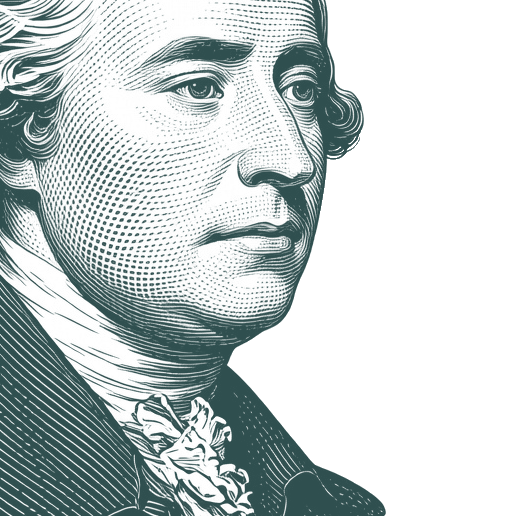
As to the right of men to act anywhere according to their pleasure, without any moral tie, no such right exists. Men are never in a state of total in… - Edmund Burke
""
As to the right of men to act anywhere according to their pleasure, without any moral tie, no such right exists. Men are never in a state of total independence of each other. It is not the condition of our nature: nor is it conceivable how any man can pursue a considerable course of action without its having some effect upon others; or, of course, without producing some degree of responsibility for his conduct.
Edmund Burke (12 January 1729 – 9 July 1797) was a British and Irish statesman and philosopher. Born in Dublin, Burke served as a member of parliament (MP) between 1766 and 1794 in the House of Commons of Great Britain with the Whig Party after moving to London in 1750.
Biography information from
Wikiquote·
Portrait adapted from
Wikimedia Commons, Joshua Reynolds (Public domain / CC0)
there is no circumstance, in all the contradictions of our most mysterious nature, that appears to be more humiliating than the use we are disposed to make of those sad examples which seem purposely marked for our correction and improvement.
"War," says Machiavel, "ought to be the only study of a prince;" and by a prince he means every sort of state, however constituted. "He ought," says this great political doctor, "to consider peace only as a breathing-time, which gives him leisure to contrive, and furnishes ability to execute military plans." A meditation on the conduct of political societies made old Hobbes imagine that war was the state of nature.
Gentlemen, the melancholy event of yesterday reads to us an awful lesson against being too much troubled about any of the objects of ordinary ambition. The worthy gentleman, who has been snatched from us at the moment of the election, and in the middle of contest, whilst his desires were as warm, and his hopes as eager as ours, has feelingly told us, what shadows we are, and what shadows we pursue.