A being who can look without weeping on the heart-rending facts that fill the cities of our so-called civilisation has a psychology granitic enough t… - J. Howard Moore
""
A being who can look without weeping on the heart-rending facts that fill the cities of our so-called civilisation has a psychology granitic enough to gaze unmoved on a hellful of roasting souls.
English
Collect this quote
About
J. Howard Moore
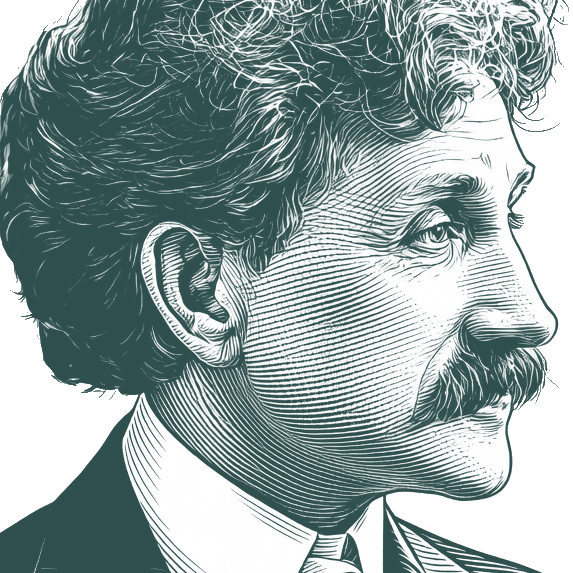
John Howard Moore (December 4, 1862 – June 17, 1916) was an American zoologist, philosopher, educator and social reformer. He advocated for the ethical consideration and treatment of animals and authored several articles, books, essays and pamphlets on topics including education, ethics, evolutionary biology, humanitarianism, utilitarianism and vegetarianism. He is best known for his work The Universal Kinship (1906), which advocated for a secular sentiocentric philosophy he called the doctrine of "Universal Kinship", based on the shared evolutionary kinship between all sentient beings.
Sometimes, in our littleness, we boast of the progress we have made, and of the knowledge, culture, and art which we as a race to-day display. But, O, it is the vanity of Adolescence. What will the knowledge, culture, and art of to-day amount to fifty or a hundred thousand years from now?—or a million years from now? Nothing! This sphere, with its clinging tenantry, will still be here then and will still be making its annual journeys round the sun, as now. But, O, what mighty and ineffable changes! The things of to-day will be so rude and childish and so far away that they will not even be considered.
The ideal conception of social obligation is bigger than family and friends, bigger than the city and State in which one happens to be born and raised, bigger than species, bigger even than the particular world of which one is a tenant. There are no aliens anywhere, not even in hell, to the being who is as big morally as he ought to be—only brothers. The universal heart goes out in tenderness beyond all boundaries of form and colour and architecture and accident of birth—into every place where quivers a living soul. The Great Law is for the healing and consolation of all. Moral obligation is as extensive as the power to feel.
Man is a talkative and religious ape. He is an ape, but with a much greater amount of enterprise and with a greater likelihood of being found in every variety of climate. Like the anthropoid, man has a bald face and an obsolete tail. But he is distinguished from his arboreal relative by his arrogant bearing, his skilled larynx, and especially by the satisfaction he experiences in the contemplation of the image which appears when he looks in a mirror.