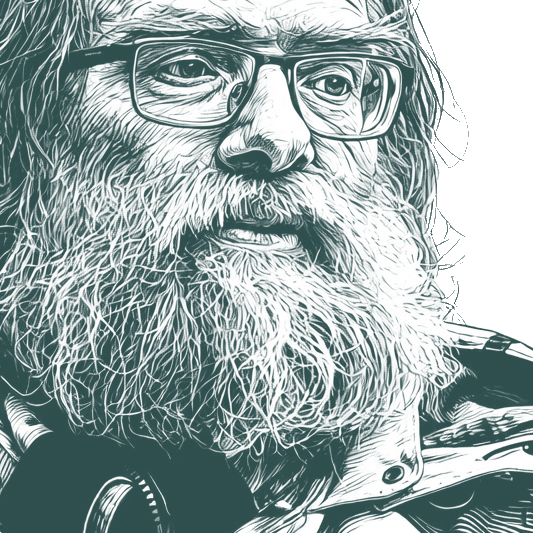
Outsiders all learn two facts about the Hindu movement: that one of its members killed the Mahatma, and that Guru Golwalkar declared himself a Nazi. … - Koenraad Elst
""
Outsiders all learn two facts about the Hindu movement: that one of its members killed the Mahatma, and that Guru Golwalkar declared himself a Nazi. You can hide your head in the sand all you want and declare smugly that you don't have to care about these outsiders, but the hostility against the Hindu movement is very much a fact and determines the world in which that same movement has to function. It explains why successful Indians play down their Hinduism, why Narayan Murthy finances American anti-Hindu Sheldon Pollock's Sanskrit studies instead of many more competent Hindus, why the BJP hires secularists and when in power fails to pursue a Hindu (so-called "communal") agenda, etc. So, I have taken it upon myself to give a fair account of the Gandhi murder and Nathuram Godse's speech, and to analyse (and refute) the Nazi allegation against Golwalkar. There are 7 billion people on earth, yet in both these crucial cases I am the only one to have done so.
English
Collect this quote
About
Koenraad Elst
Koenraad Elst (born 7 August 1959) is a Flemish right wing Hindutva author, known primarily for his support of the Out of India theory and the Hindutva movement. Scholars have accused him of harboring Islamophobia.
Unlike in the case of the Buddha, the monotheistic tag has stuck to Zarathustra. In non-specialist circles, the received wisdom nowadays is that he was a kind of Iranian Moses and that his religion may also have influenced the Israelites in a pro-monotheistic sense.
The pogroms in Pakistan and Bangladesh after the demolition of the Babri Masjid left 50,000 Hindus homeless in Bangladesh and triggered another wave of refugees from both countries towards India. In Pakistan, 245 Hindu temples were demolished, in Bangladesh a similar number was attacked, and even in England some temples were set on fire by Muslim mobs.
Try QuoteGPT
Chat naturally about what you need. Each answer links back to real quotes with citations.
The remarkable thing about Arthur Schopenhauer is that he built such a large part of his philosophy on the Upanishads and Buddhism when these were as yet so little-known (around 1820). Only towards the end of his life did he master Sanskrit, so he had to make do with just a few translations. For the Upanishads, he used Anquetil Duperron’s French translation from a Persian translation of the original Sanskrit. Yet, his understanding of them was better than that of many later thinkers. (In the same period, Georg Hegel wrote a undoubtedly biased but fairly insightful commentary on the Bhagavad-Gita.)