The ancient world found an end to anarchy in the Roman Empire, but the Roman Empire was a brute fact, not an idea. The Catholic world sought an end t… - Bertrand Russell
""
The ancient world found an end to anarchy in the Roman Empire, but the Roman Empire was a brute fact, not an idea. The Catholic world sought an end to anarchy in the church, which was an idea, but was never adequately embodied in fact. Neither the ancient nor the medieval solution was satisfactory – the one because it could not be idealized, the other because it could not be actualized. The modern world, at present, seems to be moving towards a solution like that of antiquity: a social order imposed by force, representing the will of the powerful rather than the hopes of the common men. The problem of a durable and satisfactory social order can only be solved by combining the solidarity of the Roman Empire with the idealism of St. Augustine’s City of God. To achieve this a new philosophy will be needed
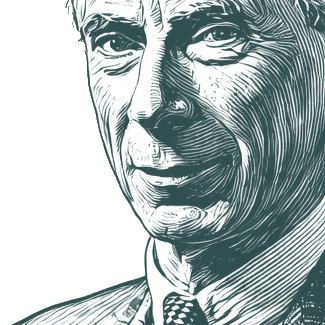
Bertrand Arthur William Russell, 3rd Earl Russell (May 18, 1872 – February 2, 1970) was a British philosopher, logician, mathematician, historian, and social critic. In 1950, he was awarded a Nobel Prize in Literature.
Biography information from
Wikiquote·
Portrait adapted from
Wikimedia Commons, Bassano Ltd (Public domain / CC0)
Also Known As
Birth Name:
Bertrand Arthur William Russell
Alternative Names:
Bertrand Russell, 3rd Earl Russell
•
Bertrand Russell, Earl Russell
•
Bertrand Arthur William Russell, 3rd Earl Russell
•
Russell
[One] must look into hell before one has any right to speak of heaven.
Having made the decision, do not revise it unless some new fact comes to your knowledge. Nothing is so exhausting as indecision, and nothing is so futile.
Go Premium
Support Quotewise while enjoying an ad-free experience and premium features.
The typical Westerner wishes to be the cause of as many changes as possible in his environment; the typical Chinaman wishes to enjoy as much and as delicately as possible.