Lyra sighed; she had forgotten how roundabout Scholars could be. It was difficult to tell them the truth when a lie would have been so much easier fo… - Philip Pullman
""
Lyra sighed; she had forgotten how roundabout Scholars could be. It was difficult to tell them the truth when a lie would have been so much easier for them to understand.
English
Collect this quote
About
Philip Pullman
Philip Pullman CBE (born October 19, 1946) is an English writer. He is the best-selling author of His Dark Materials, a trilogy of fantasy novels, and a number of other books.
Biography information from
Wikiquote·
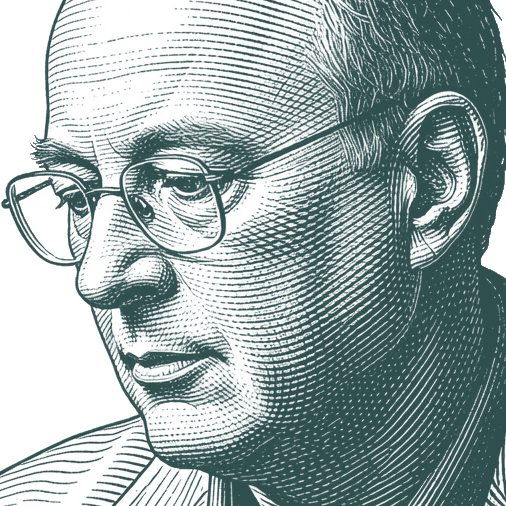
Portrait adapted from
Wikimedia Commons, Photographed by Adrian Hon, http://mssv.net/ (CC BY-SA)
Also Known As
Alternative Names:
Sir Philip Pullman
•
Sir Philip Nicholas Outram Pullman
We feel cold, but we don't mind it, because we will not come to harm. And if we wrapped up against the cold, we wouldn't feel other things, like the bright tingle of the stars, or the music of the aurora, or best of all the silky feeling of moonlight on our skin. It's worth being cold for that.
"There are some themes, some subjects, too large for adult fiction; they can only be dealt with adequately in a children's book.
The reason for that is that in adult literary fiction, stories are there on sufferance. Other things are felt to be more important: technique, style, literary knowingness. Adult writers who deal in straightforward stories find themselves sidelined into a genre such as crime or science fiction, where no one expects literary craftsmanship.
But stories are vital. Stories never fail us because, as Isaac Bashevis Singer says, "events never grow stale." There's more wisdom in a story than in volumes of philosophy. And by a story I mean not only Little Red Riding Hood and Cinderella and Jack and the Beanstalk but also the great novels of the nineteenth century, Jane Eyre, Middlemarch, Bleak House and many others: novels where the story is at the center of the writer's attention, where the plot actually matters. The present-day would-be George Eliots take up their stories as if with a pair of tongs. They're embarrassed by them. If they could write novels without stories in them, they would. Sometimes they do.
But what characterizes the best of children's authors is that they're not embarrassed to tell stories. They know how important stories are, and they know, too, that if you start telling a story you've got to carry on till you get to the end. And you can't provide two ends, either, and invite the reader to choose between them. Or as in a highly praised recent adult novel I'm about to stop reading, three different beginnings. In a book for children you can't put the plot on hold while you cut artistic capers for the amusement of your sophisticated readers, because, thank God, your readers are not sophisticated. They've got more important things in mind than your dazzling skill with wordplay. They want to know what happens next."
PREMIUM FEATURE
Advanced Search Filters
Filter search results by source, date, and more with our premium search tools.