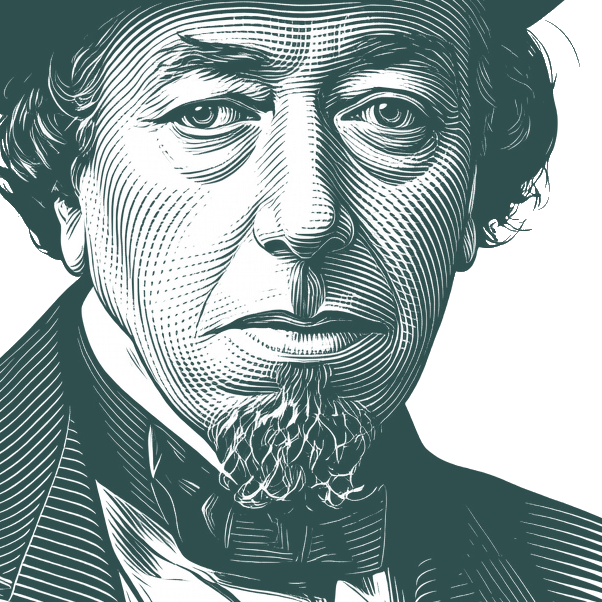
That fatal drollery called a representative government. - Benjamin Disraeli
""
That fatal drollery called a representative government.
English
Collect this quote
About
Benjamin Disraeli
Benjamin Disraeli, 1st Earl of Beaconsfield (21 December 1804 – 19 April 1881) was a British politician, novelist, and essayist, serving twice as Prime Minister of the United Kingdom. The anniversary of his death on 19 April is known as Primrose Day.
Biography information from
Wikiquote·
Portrait adapted from
Wikimedia Commons, Cornelius Jabez Hughes (Public domain / CC0)
Also Known As
Birth Name:
Benjamin D'Israeli
Alternative Names:
1st Earl of Beaconsfield Benjamin Disraeli
•
Benjamin, Earl of Beaconsfield Disraeli
•
Benjamin Disraeli, Earl of Beaconsfield
•
Benjamin, Earl of Beaconsfield, Viscount Hughenden of Hughenden Disraeli
•
Dizzy
•
Lord Beaconsfield
I had to prepare the mind of the country, and to educate...our party... I had to prepare the mind of Parliament and the country on this question of Reform.
A wise Government, allying itself with religion, would, as it were, consecrate society and sanctify the State. But how is this to be done? It is the problem of modern politics which has always most embarrassed statesmen. No solution of the difficulty can be found in salaried priesthoods and complicated concordats. But by the side of the State in England there has gradually arisen a majestic corporation wealthy, powerful, independent with the sanctity of a long tradition, yet sympathising with authority, and full of conciliation, even deference, to the civil power. Broadly and deeply planted in the land, mixed up with all our manners and customs, one of the main guarantees of our local government, and therefore one of the prime securities of our common liberties, the Church of England is part of our history, part of our life, part of England itself.
The hon. Gentleman has said, in a most extraordinary manner, that our security for peace at the present day is the desire of nations to keep at home. There is a great difference between nationality and race. Nationality is the principle of political independence. Race is the principle of physical analogy, and you have at this moment the principle of race—not at all of nationality—adopted by Germany, the very country to which the hon. Member for the West Riding referred.