I think very much of the people, as an old friend said he thought of woman. He said when he lost his first wife, who had been a great help to him in … - Abraham Lincoln
""
I think very much of the people, as an old friend said he thought of woman. He said when he lost his first wife, who had been a great help to him in his business, he thought he was ruined — that he could never find another to fill her place. At length, however, he married another, who he found did quite as well as the first, and that his opinion now was that any woman would do well who was well done by. So I think of the whole people of this nation — they will ever do well if well done by. We will try to do well by them in all parts of the country, North and South, with entire confidence that all will be well with all of us.
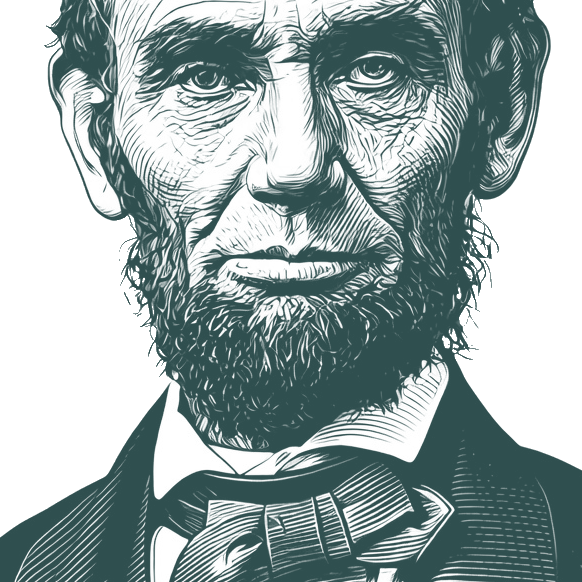
Abraham Lincoln (12 February 1809 – 15 April 1865) was the 16th president of the United States, serving from March 1861 until his assassination in April 1865. Initially entering politics as a Whig, he became a member of the US congress from Illinois, and later the first Republican president, leading Union forces throughout the moral, constitutional, political and military crises of the American Civil War, during which he abolished slavery and strengthened the U.S. government.
Biography information from
Wikiquote·
Portrait adapted from
Wikimedia Commons, Alexander Gardner (Public domain / CC0)
Also Known As
Alternative Names:
Honest Abe
•
President Lincoln
•
Abe Lincoln
•
Uncle Abe
•
A. Lincoln
•
Lincoln
I don't like that man. I must get to know him better.
The dogmas of the quiet past are inadequate to the stormy present. The occasion is piled high with difficulty, and we must rise with the occasion. As our case is new, so we must think anew and act anew. We must disenthrall ourselves, and then we shall save our country.
Fellow-citizens, we can not escape history. We of this Congress and this Administration will be remembered in spite of ourselves. No personal significance or insignificance can spare one or another of us. The fiery trial through which we pass will light us down in honor or dishonor to the latest generation. We say we are for the Union. The world will not forget that we say this. We know how to save the Union. The world knows we do know how to save it. We, even we here, hold the power and bear the responsibility. In giving freedom to the slave we assure freedom to the free — honorable alike in what we give and what we preserve. We shall nobly save or meanly lose the last best hope of earth. Other means may succeed; this could not fail. The way is plain, peaceful, generous, just — a way which if followed the world will forever applaud and God must forever bless.
Try QuoteGPT
Chat naturally about what you need. Each answer links back to real quotes with citations.
But you say you are conservative — eminently conservative while we are revolutionary, destructive, or something of the sort. What is conservatism? Is it not adherence to the old and tried, against the new and untried? We stick to, contend for, the identical old policy on the point in controversy which was adopted by our fathers who framed the Government under which we live; while you with one accord reject, and scout, and spit upon that old policy, and insist upon substituting something new. True, you disagree among yourselves as to what that substitute shall be. You have considerable variety of new propositions and plans, but you are unanimous in rejecting and denouncing the old policy of the fathers. Some of you are for reviving the foreign slavetrade; some for a Congressional Slave-Code for the Territories; some for Congress forbidding the Territories to prohibit Slavery within their limits; some for maintaining Slavery in the Territories through the Judiciary; some for the "gur-reat pur-rin-ciple" that "if one man would enslave another, no third man should object," fantastically called "Popular Sovereignty;" [great laughter,] but never a man among you in favor of Federal prohibition of Slavery in Federal Territories, according to the practice of our fathers who framed the Government under which we live. Not one of all your various plans can show a precedent or an advocate in the century within which our Government originated. And yet you draw yourselves up and say "We are eminently conservative!"