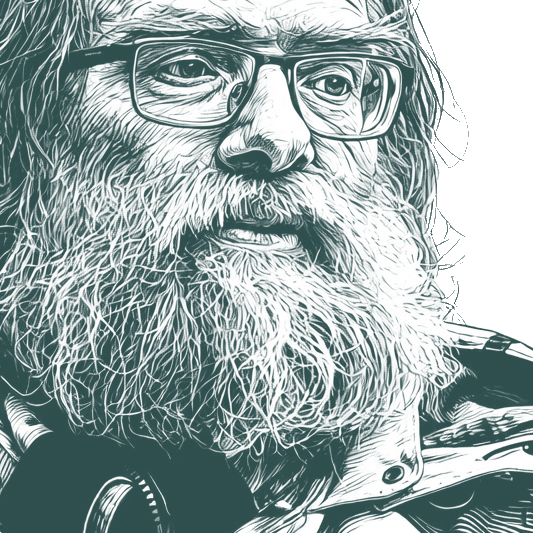
In Hindu scriptures, the Chakravartin is described as a suzerain who receives tribute from subject rulers, but who respects the autonomy (swarajya) a… - Koenraad Elst
""
In Hindu scriptures, the Chakravartin is described as a suzerain who receives tribute from subject rulers, but who respects the autonomy (swarajya) and local customs (swadharma) of his subject nations. Is that what Hitler did? The Buddhist ideal of the Chakravartin was emperor Ashoka, who had his regrets about his initial military conquest (needed to round off his predecessors’ conquests upto India’s natural borders, easy to defend) chiselled in stone pillars. He explicitly dropped the ambition of further military conquest and opted for “religious conquest” (Dharma-Vijaya) instead. And lest anyone start misquoting this, the meaning of “religious conquest” is not something like Jihad, Islamic war against the Infidels, but simply promoting morality and sending out Buddhist missionaries. Far from illustrating that Buddhism had its imperialists too, as the Trimondis present it, the story of Ashoka is one of pacifism.
Koenraad Elst (born 7 August 1959) is a Flemish right wing Hindutva author, known primarily for his support of the Out of India theory and the Hindutva movement. Scholars have accused him of harboring Islamophobia.
According to the cover text on his book, Eaton is professor of History at the University of Arizona and “a leading historian of Islam”. Had he defended the thesis that iconoclasm is rooted in Islam itself, he would have done justice to the evidence from Islamic sources, yet he would have found it very hard to get published by Oxford University Press or reach the status of leading Islam scholar that he now enjoys. One can easily become an acclaimed scholar of Hinduism by lambasting and vilifying that religion, but Islam is somehow more demanding of respect.
Once the support of the Nehruvian historians to such utter falsifications of history is tackled and exposed, they have no chance of saving their reputations or even the hold of their theories over the public arena. They have gone too far in their distortions of history, so they are very vulnerable. If they have held out in the role of oft-quoted "eminent historians" for so long, it is only due to the slackness and timidity of the Hindu intellectuals. Only because of a configuration of forces peculiar to India have the anti-Hindu historians been able to completely dominate the scene. In most free countries, they would have been exposed long ago. ... In a world where the wind of free inquiry blows, Marxist dogmas cannot hold out for long. They have been abandoned, except in those places where an artificial authority is attached to them by a partisan intelligentsia... So, in my opinion, the dominance of these Nehruvian and other Hindu-baiters need not last much longer. Their eminence will go down as soon as the debunking of their central myths has come centre-stage in the intellectual arena (which means that an issue-centered critique will suffice to do most of the job). And that can go unexpectedly fast, there are plenty of occasions at which the readers are interested enough to pick up an alternative thesis, if only it gets competently presented to them. ... From his high pedestal, Prof. Sharma could afford to disregard [his critics], and he "appears to have been in no mood to take heed of criticism levelled at his work". This disregarding and ignoring of counter-evidence is tactically the best way to prolong your dominant position (which is why this tactic was adopted by most secularists in the Ayodhya debate): it denies publicity and respectability to the critic's alternative thesis. But to the progress of science, this upholding of dogma and suppression of debate is detrimental.
PREMIUM FEATURE
Advanced Search Filters
Filter search results by source, date, and more with our premium search tools.
The figures for Kerala exemplify a general rule: at any given level of literacy and economic status, Muslims will have a markedly higher birth rate than their Hindu counterparts, even to the extent of having a higher birth rate than Hindus in a lower educational or income bracket. A secularist journalist, Pranay Gupta, estimates that in Hyderabad, which has a large Muslim middle-class, a typical Muslim family has eight children while a Hindu family has four.